Quote
"One cannot divine nor forecast the conditions that will make happiness; one only stumbles upon them by chance, in a lucky hour, at the worlds end somewhere, and hold fast to the days, as to fortune or fame."
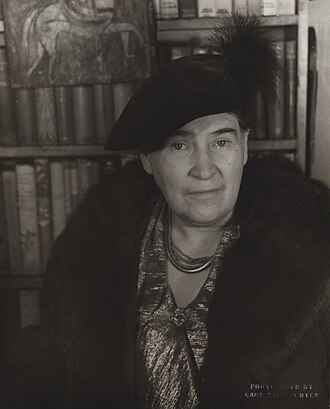 Willa Cather
"Religion is different from everything else; because in religion seeking is finding."
Willa Sibert Cather was an American writer known for her novels of life on the Great Plains, including O Pioneers!, The Song of the Lark, and My Ántonia. In 1923, she was awarded the Pulitzer Prize for One of Ours, a novel set during World War I.
"One cannot divine nor forecast the conditions that will make happiness; one only stumbles upon them by chance, in a lucky hour, at the worlds end somewhere, and hold fast to the days, as to fortune or fame."
Willa Cather"Directly under his feet was the French stronghold, — scattered spires and slated roofs flashing in the rich, autumnal sunlight; the little capital which was just then the subject of so much discussion in Europe, and the goal of so many fantastic dreams."
Willa Cather"There are only two or three human stories, and they go on repeating themselves as fiercely as if they had never happened before; like the larks in this country, that have been singing the same five notes over for thousands of years."
Willa Cather"Now everything was in ruins. The air was still and cold like the air in a refrigerating-room. What I felt was fear; I was afraid to look or speak or move. Everything about me seemed evil. When kindness has left people, even for a few moments, we become afraid of them, as if their reason had left them. When it has left a place where we have always found it, it is like shipwreck; we drop from security into something malevolent and bottomless."
Willa Cather"Cleric said he thought Virgil, when he was dying at Brindisi, must have remembered that passage. After he had faced the bitter fact that he was to leave the Aeneid unfinished, and had decreed that the great canvas, crowded with figures of gods and men, should be burned rather than survive him unperfected, then his mind must have gone back to the perfect utterance of the Georgics, where the pen was fitted to the matter as the plough is to the furrow; and he must have said to himself, with the thankfulness of a good man, I was the first to bring the Muse into my country."
Willa Cather"There seemed to be nothing to see; no fences, no creeks or trees, no hills or fields. If there was a road, I could not make it out in the faint starlight. There was nothing but land: not a country at all, but the material out of which countries are made."
Willa Cather