SHAWORDS

Scientists are just as vulnerable to wishful thinking, just as likely — Daniel Dennett

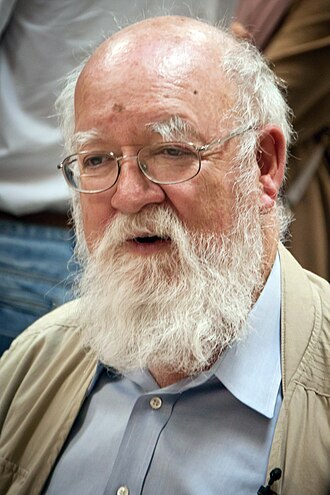
"Scientists are just as vulnerable to wishful thinking, just as likely to be tempted by base motives, just as venal and gullible and forgetful as the rest of humankind. Scientists dont consider themselves to be saints; they dont even pretend to be priests (who according to tradition are supposed to do a better job than the rest of us at fighting off human temptation and frailty). Scientists take themselves to be just as weak and fallible as anybody else, but recognizing those very sources of error in themselves and in the groups to which they belong, they have devised elaborate systems to tie their own hands, forcibly preventing their frailties and prejudices from infecting their results."
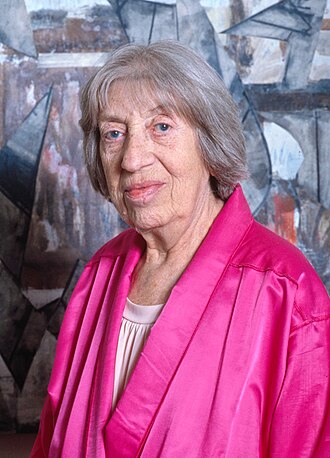
Daniel Dennett
Daniel Dennett
Daniel Dennett
author77 quotes

Daniel Clement Dennett III was an American philosopher and cognitive scientist. His research centered on philosophy of mind, philosophy of science, and philosophy of biology, particularly as those fields relate to evolutionary biology and cognitive science.

More by Daniel Dennett

View all →
Quote
"We alone can be wracked with doubt, and we alone have been provoked by that epistemic itch to seek a remedy: better truth-seeking methods. Wanting to keep better track of our food supplies, our territories, our families, our enemies, we discovered the benefits of talking it over with others, asking questions, passing on lore. We invented culture. Then we invented measuring, and arithmetic, and maps, and writing. These communicative and recording innovations come with a built-in ideal: truth. The point of asking questions is to find true answers; the point of measuring is to measure accurately; the point of making maps is to find your way to your destination. … In short, the goal of truth goes without saying, in every human culture."
Daniel DennettDaniel Dennett
Quote
"I have grown accustomed to the disrespect expressed by some of the participants for their colleagues in the other disciplines. "Why, Dan," ask the people in artificial intelligence, "do you waste your time conferring with those neuroscientists? They wave their hands about information processing and worry about where it happens, and which neurotransmitters are involved, but they havent a clue about the computational requirements of higher cognitive functions." "Why," ask the neuroscientists, "do you waste your time on the fantasies of artificial intelligence? They just invent whatever machinery they want, and say unpardonably ignorant things about the brain." The cognitive psychologists, meanwhile, are accused of concocting models with neither biological plausibility nor proven computational powers; the anthropologists wouldnt know a model if they saw one, and the philosophers, as we all know, just take in each others laundry, warning about confusions they themselves have created, in an arena bereft of both data and empirically testable theories. With so many idiots working on the problem, no wonder consciousness is still a mystery. All these charges are true, and more besides, but I have yet to encounter any idiots. Mostly the theorists I have drawn from strike me as very smart people – even brilliant people, with the arrogance and impatience that often comes with brilliance – but with limited perspectives and agendas, trying to make progress on the hard problems by taking whatever shortcuts they can see, while deploring other peoples shortcuts. No one can keep all the problems and details clear, including me, and everyone has to mumble, guess and handwave about large parts of the problem."
Daniel DennettDaniel Dennett
Quote
"Of all the mind tools we acquire in the course of furnishing our brains from the stockpiles of culture, none are more important, of course, than words — first spoken, then written. Words make us more intelligent by making cognition easier, in the same way (many times multiplied) that beacons and landmarks make navigation in the world easier for simple creatures. Navigation in the abstract multidimensional world of ideas is simply impossible without a huge stock of movable, memorable landmarks that can be shared, criticized, recorded, and looked at from different perspectives."
Daniel DennettDaniel Dennett

More on Gul

View all →
Quote
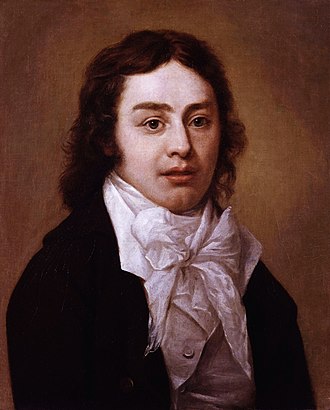
"How seldom, Friend! a good great man inherits Honour or wealth, with all his worth and pains! It sounds like stories from the land of spirits, If any man obtain that which he merits, Or any merit that which he obtains.   . For shame, dear Friend! renounce this canting strain! … Greatness and goodness are not means, but ends! Hath he not always treasures, always friends, The good great man? Three treasures, and , And , regular as infants breath; And three firm friends, more sure than day and night, , his , and the Angel ."
Samuel Taylor ColeridgeSamuel Taylor Coleridge
Quote
"If the proverbial man of the planet Mars would come to this earth and inquire about the difference between "leader" and "ruler" he would learn that "rulers" are strange people who dressed in ermine, wore crowns, married foreign women, kept strictly to themselves, and had the inclination to administer the country without asking the people about their wishes. A "leader," on the other hand, he would be told, is a regular fellow in a simple uniform who embodies his nation, who tries desperately to create by propaganda complete unison between his ideas and the people. A leader, he might hear, was a local boy who made good, who spoke everybodys language, who never traveled abroad and disliked titles and royal paraphernalia."
LeadershipLeadership
Quote
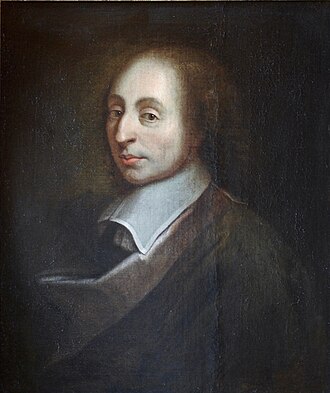
"When I consider the short duration of my life, swallowed up in the eternity before and after, the small space which I fill, or even can see, engulfed in the infinite immensity of spaces whereof I know nothing, and which know nothing of me, I am terrified, and wonder that I am here rather than there, for there is no reason why here rather than there, or now rather than then. Who has set me here? By whose order and design have this place and time been destined for me?—Memoria hospitis unius diei prætereuntis. It is not well to be too much at liberty. It is not well to have all we want. How many kingdoms know nothing of us! The eternal silence of these infinite spaces alarms me."
Blaise PascalBlaise Pascal