Quote
"The Ego and his Own at www.flag.blackened.net"
M
Max Stirner"Stirnerian self-mastery thus has both external and internal dimensions, demanding not only that we avoid subordinating ourselves to others, but also that we avoid submitting to our own appetites or ends. Stirner accepts the claim that if any idea or desire plants itself firmly in me, and becomes indissoluble, then I have become its prisoner and servant, a possessed man (p. 127). This attack on the Christian fixedity of ideas does not entail that the egoist can no longer allow herself to have ideas, but rather that she must never allow an idea to make her a tool of its realization (p. 302). The egoist must exercise power not only over the exactions and violences of the world, but also exercise this power over my nature and avoid becoming the slave of my appetites (p. 295). Stirner thus encourages the individual to cultivate and extend an ideal of emotional detachment towards both her passions and her ideas."
Johann Caspar Schmidt, known by the pen name Max Stirner, was a German philosopher, dealing mainly with the Hegelian notion of social alienation and self-consciousness. Stirner is often seen as one of the forerunners of nihilism, existentialism, psychoanalytic theory, postmodernism, individualist anarchism, and egoism.
"The Ego and his Own at www.flag.blackened.net"
"But let the individual man lay claim to ever so many rights because Man or the concept man ‘entitles’ him to them, because his being man does it: what do I care for his right and his claim? If he has his right only from Man and does not have it from me, then for me he has no right. His life, for example, counts to me only for what it is worth to me. I respect neither a so-called right of property (or his claim to tangible goods) nor yet his right to the ‘sanctuary of his inner nature’ (or his right to have the spiritual goods and divinities, his gods, remain un-aggrieved). His goods, the sensuous as well as the spiritual, are mine, and I dispose of them as proprietor, in the measure of my — might."
"Just as the schoolmen philosophized only inside the belief of the church, … without ever throwing a doubt upon this belief; as authors fill whole folios on the State without calling in question the fixed idea of the State itself; as our newspapers are crammed with politics because they are conjured into the fancy that man was created to be a zoon politicon,—so also subjects vegetate in subjection, virtuous people in virtue, liberals in humanity, etc., without ever putting to these fixed ideas of theirs the searching knife of criticism. Undislodgeable, like a madman’s delusion, those thoughts stand on a firm footing, and he who doubts them—lays hands on the sacred!"
"Man with the great M is only an ideal, the species only something thought of."
"If a concept lacks an essence, nothing will ever be found that completely fits that concept. If you are lacking in the concept of human being, it will immediately expose that you are something individual, something that cannot be expressed by the term human being, thus, in every instance, an individual human being."
"Everything sacred is a tie, a fetter."
"The true Vedantic spirit does not start out with a system of preconceived ideas. It possesses absolute liberty and unrivalled courage among religions with regard to the facts to be observed and the diverse hypotheses it has laid down for their coordination. Never having been hampered by a priestly order, each man has been entirely free to search wherever he pleased for the spiritual explanation of the spectacle of the universe."
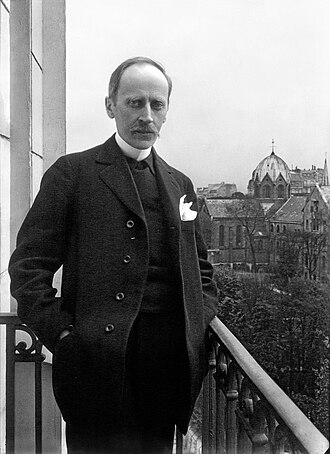 Romain Rolland
"The decades-long draconian approach of the international community to preventing drug dependence is now widely recognised to have been a human disaster, both in the failure to tackle the primary issue and for the additional human suffering caused, including the patients in moderate to severe pain who have been prevented from accessing essential medicines. We need politicians and policymakers to be courageous enough to admit that past policies were misguided, and to rebalance their priorities and approaches in ways that will reduce human suffering."
"O may I join the choir invisible Of those immortal dead who live again In minds made better by their presence; live In pulses stirred to generosity, In deeds of daring rectitude, in scorn For miserable aims that end with self, In thoughts sublime that pierce the night like stars, And with their mild persistence urge mens search To vaster issues."
"There is no question that religions have historically played the role of making people contented with their lot. ...such a doctrine would be very appealing to the ruling classes of a society. ...Many societies, for this reason alone, encourage the contentment with your lot that the religious premise of heaven affords."
"Value of a man depends upon his courage; his veracity depends upon his self-respect and his chastity depends upon his sense of honor."
"What counts most is holding on. The growth of a train of thought is not a direct forward flow. There is a succession of spurts separated by intervals of stagnation, frustration, and discouragement. If you hold on, there is bound to come a certain clarification. The unessential components drop off and a coherent, lucid whole begins to take shape."