Quote
"Human nature is intractable stuff, hard jagged stuff, the kind of stuff that dreams are wrecked on."
H
Human nature"There is a startling similarity between Bacon’s prescription for mastering nature—“Nature, to be commanded, must be obeyed”—and Loyola’s formula for manipulating men—“Follow the other man’s course to your own goal.”"
Human nature comprises the fundamental dispositions and characteristics—including ways of thinking, feeling, and acting—that humans are said to have naturally. The term is often used to denote the essence of humankind; however, this usage has proven to be controversial in that there is dispute as to whether or not such an essence actually exists.
"Human nature is intractable stuff, hard jagged stuff, the kind of stuff that dreams are wrecked on."
"Thus we discover that this blind and impersonal process produced humans not in a lightning flash, not in a sudden instant of creation, but as the result of accumulation. The origin of humans is not something that can be pinpointed at five million years, or one million years, or 100,000 years in the past, but, rather, occurs continuously over time. Our origin is the whole pattern of evolution, although there are key events that we must discover and identify. The things that make us human are acquired as a complex mosaic—we became upright four million years ago; we began to make tools two million years ago; we began to live all over the earth less than one million years ago; and possibly we only acquired language in the last 100,000 years or so. Each of these factors is an essential part of the process of becoming human. What makes human evolution such an endlessly fascinating story is trying to visualize the stages, imagining what sort of a creature could walk upright but not talk, make tools but not use fire, survive the rigors of the Ice Age but know nothing of agriculture and a settled way of life."
"In the course of evolution nature has gone to endless trouble to see that every individual is unlike every other individual. ... Physically and mentally, each one of us is unique. Any culture which, in the interests of efficiency or in the name of some political or religious dogma, seeks to standardize the human individual, commits an outrage against man’s biological nature."
"Before all other things, man is distinguished by his pursuit and investigation of Truth. And hence, when free from needful business and cares, we delight to see, to hear, and to communicate, and consider a knowledge of many admirable and abstruse things necessary to the good conduct and happiness of our lives: whence it is clear that whatsoever is True, simple, and direct, the same is most congenial to our nature as men. Closely allied with this earnest longing to see and know the truth, is a kind of dignified and princely sentiment which forbids a mind, naturally well constituted, to submit its faculties to any but those who announce it in precept or in doctrine, or to yield obedience to any orders but such as are at once just, lawful, and founded on utility. From this source spring greatness of mind and contempt of worldly advantages and troubles."
"Everyone who achieves strives for totality, and the value of his achievement lies in that totality—that is, in the fact that the whole, undivided nature of a human being should be expressed in his achievement. But when determined by our society, as we see it today, achievement does not express a totality; it is completely fragmented and derivative. It is not uncommon for the community to be the site where a joint and covert struggle is waged against higher ambitions and more personal goals. ... The socially relevant achievement of the average person serves in the vast majority of cases to repress the original and nonderivative, inner aspirations of the human being."
"History often reproduces without reference to nationality some particular human type or class which becomes active and predominant for a time, and fades away when its task is finished. It is, however, not utterly lost, for the germ of it lies dormant yet ready to re-appear when the exigencies of the moment recall it. The reserve forces of human nature are inexhaustible and inextinguishable."
"Now Art, used collectively for painting, sculpture, architecture and music, is the mediatress between, and reconciler of, nature and man. It is, therefore, the power of humanizing nature, of infusing the thoughts and passions of man into everything which is the object of his contemplation."
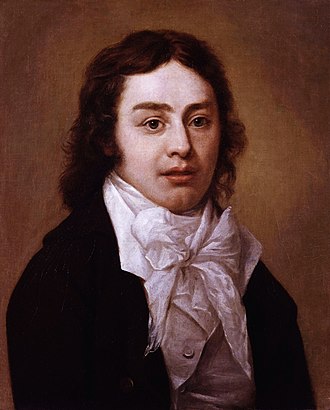 Samuel Taylor Coleridge
"The Good consists in the congruity of a thing with the laws of the reason and the nature of the will, and in its fitness to determine the latter to actualize the former: and it is always discursive. The Beautiful arises from the perceived harmony of an object, whether sight or sound, with the inborn and constitutive rules of the judgment and imagination: and it is always intuitive."
Samuel Taylor Coleridge"I believe that the unity of man as opposed to other living things derives from the fact that man is the conscious life of himself. Man is conscious of himself, of his future, which is death, of his smallness, of his impotence; he is aware of others as others; man is in nature, subject to its laws even if he transcends it with his thought."
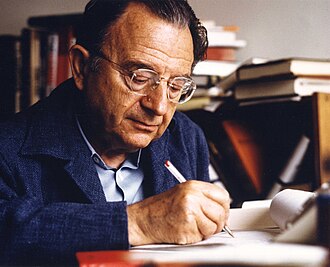 Erich Fromm
"Who made you glorious as the gates of heaven Beneath the keen full moon? Who bade the sun Clothe you with rainbows? Who, with living flower Of loveliest blue, spread garlands at your feet? God! let the torrents, like a shout of nations, Answer! and let the ice-plains echo, God! God! sing, ye meadow-streams, with gladsome voice! Ye pine-groves, with your soft and soul-like sounds! And they too have a voice, yon piles of snow, And in their perilous fall shall thunder, God!"
Samuel Taylor Coleridge"All Nature seems at work. Slugs leave their lair — The bees are stirring — birds are on the wing — And Winter slumbering in the open air, Wears on his smiling face a dream of Spring! And I the while, the sole unbusy thing, Nor honey make, nor pair, nor build, nor sing."
Samuel Taylor Coleridge"Taste is the intermediate faculty which connects the active with the passive powers of our nature, the intellect with the senses; and its appointed function is to elevate the images of the latter, while it realizes the ideas of the former."
Samuel Taylor Coleridge