Quote
"Everybody makes fun of virtue, which by now has, as its primary meaning, an affectation of prudery practiced by hypocrites and the impotent."
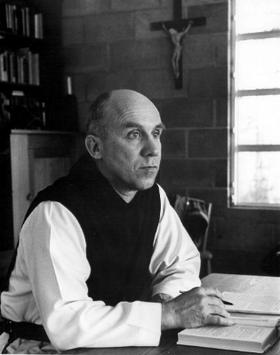 Thomas Merton
"There is not a flower that opens, not a seed that falls into the ground, and not an ear of wheat that nods on the end of its stalk in the wind that does not preach and proclaim the greatness and the mercy of God to the whole world. There is not an act of kindness or generosity, not an act of sacrifice done, or a word of peace and gentleness spoken, not a childs prayer uttered, that does not sing hymns to God before his throne, and in the eyes of men, and before their faces."
Thomas Merton, religious name M. Louis, was an American Trappist monk, theologian, mystic, poet, and social activist. He was a professed member of the Abbey of Our Lady of Gethsemani, near Bardstown, Kentucky, living there from 1941 to his death.
"Everybody makes fun of virtue, which by now has, as its primary meaning, an affectation of prudery practiced by hypocrites and the impotent."
Thomas Merton"The whole idea of compassion is based on a keen awareness of the interdependence of all these living beings, which are all part of one another, and all involved in one another."
Thomas Merton"The biggest human temptation is … to settle for too little."
Thomas Merton"When I criticize a system, they think I criticize them—and that is of course because they accept the system and identify themselves with it. All love and bliss! And they seem to have no idea that the affluence (which for them is the kingdom of God) has another side to it—the buried bodies of children in Vietnam and the Negro-Puerto Rican ghettos."
Thomas Merton"To say that I am made in the image of God is to say that Love is the reason for my existence, for God is love. Love is my true identity. Selflessness is my true self. Love is my true character. Love is my name."
Thomas Merton"The devil is no fool. He can get people feeling about heaven the way they ought to feel about hell. He can make them fear the means of grace the way they do not fear sin. And he does so not by light but by obscurity, not by realities but by shadows, not by clarity and substance but by dreams and the creatures of psychosis. And men are so poor in intellect that a few cold chills down their spine will be enough to keep them from ever finding out the truth about anything."
Thomas Merton"Now Art, used collectively for painting, sculpture, architecture and music, is the mediatress between, and reconciler of, nature and man. It is, therefore, the power of humanizing nature, of infusing the thoughts and passions of man into everything which is the object of his contemplation."
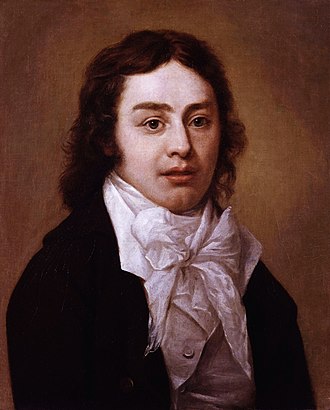 Samuel Taylor Coleridge
"The Good consists in the congruity of a thing with the laws of the reason and the nature of the will, and in its fitness to determine the latter to actualize the former: and it is always discursive. The Beautiful arises from the perceived harmony of an object, whether sight or sound, with the inborn and constitutive rules of the judgment and imagination: and it is always intuitive."
Samuel Taylor Coleridge"I believe that the unity of man as opposed to other living things derives from the fact that man is the conscious life of himself. Man is conscious of himself, of his future, which is death, of his smallness, of his impotence; he is aware of others as others; man is in nature, subject to its laws even if he transcends it with his thought."
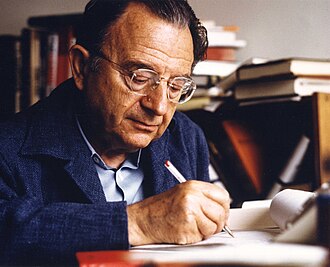 Erich Fromm
"Who made you glorious as the gates of heaven Beneath the keen full moon? Who bade the sun Clothe you with rainbows? Who, with living flower Of loveliest blue, spread garlands at your feet? God! let the torrents, like a shout of nations, Answer! and let the ice-plains echo, God! God! sing, ye meadow-streams, with gladsome voice! Ye pine-groves, with your soft and soul-like sounds! And they too have a voice, yon piles of snow, And in their perilous fall shall thunder, God!"
Samuel Taylor Coleridge"All Nature seems at work. Slugs leave their lair — The bees are stirring — birds are on the wing — And Winter slumbering in the open air, Wears on his smiling face a dream of Spring! And I the while, the sole unbusy thing, Nor honey make, nor pair, nor build, nor sing."
Samuel Taylor Coleridge"Taste is the intermediate faculty which connects the active with the passive powers of our nature, the intellect with the senses; and its appointed function is to elevate the images of the latter, while it realizes the ideas of the former."
Samuel Taylor Coleridge