Quote
"When I guarantee something, its the same as the word of the Almighty."
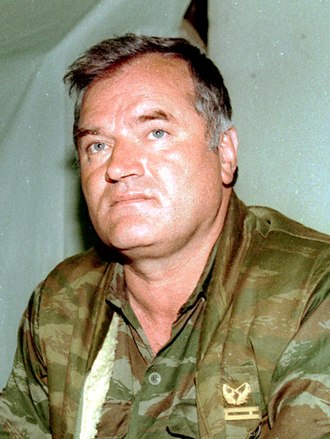 Ratko Mladić
"We are fully aware that war is not the only way to defend our values. But if those values are fundamentally endangered, as is the case today, then war is the only way to defend them. Everything that hinders us in our effort to defend ourselves is an injustice. We did not want this war, it was thrust upon us, like all others. Defending ones people is a holy duty,"
Ratko Mladić is a Bosnian Serb former military officer who led the Army of Republika Srpska (VRS) during the Yugoslav Wars. In 2017, he was found guilty of committing war crimes, crimes against humanity, and genocide by the International Criminal Tribunal for the former Yugoslavia (ICTY). He is serving a life sentence for these crimes in The Hague.
"When I guarantee something, its the same as the word of the Almighty."
Ratko Mladić"As a confused old pensioner or retiree, Mladic is in danger of arousing local sympathy in rather the same way John Demjanjuk did but of doing so within a few years of the original atrocities and not several decades. Moreover, Mladic was a director and organizer of the mass slaughters at Srebrenica and Zepa (as of the obscene bombardment of the open city of Sarajevo), and not a mere follower of orders. The new and allegedly reformist Serbian government bears some responsibility for this moment of moral nullity and confusion, since it seems to regard the arrest of Mladic and his political boss Radovan Karadzic as little more than an episode in the warming of Belgrades relations with the European Union. You dont have to be a practicing Serbo-chauvinist to find something a bit trivial and sordid in that calculation. (And what if it doesnt prove possible to stretch the increasingly inelastic Eurozone to accommodate Serbias pressing needs and add them to those of Greece and Ireland? A possible hostage to fortune here.)"
Ratko Mladić"Setting his goal as the creation of a ‘Greater Serbia’, Milošević deployed the Yugoslav National Army (JNA) — then the fourth largest army in Europe — against would-be secessionist republics. Meanwhile, Serb separatist forces within such republics were encouraged to rise up. Lacking a large Serb population, Slovenia was allowed by Milosevic, after a ‘ten-day war’, to go its own way after declaring independence in June 1991. Not so with Croatia and Bosnia-Herzegovina: he was determined that their sizeable Serb minority populations would remain within Yugoslavia. Milosevic loyalists helped carve out Serb autonomous enclaves in each: first Milan Babic in the Serb-dominated Krajina region of Croatia, and then General Ratko Mladić and the psychiatrist-turned-demagogue Radovan Karadžić, within Bosnia. Paramilitary gangs bearing outlandish names — Arkan’s Tigers, the White Eagles, the Chetniks — rampaged through Serb-run Croatia and Bosnia, bringing death and destruction wherever they went. In the process they endowed the lexicon of conflict with a new term, ethnicko cis cenje terena — literally the ‘ethnic cleansing of the earth’, or simply ethnic cleansing."
Ratko Mladić"Krle, Krstić, come on. Record that flag. Tear that flag down so it doesnt fly any more. Pull it down. Bravo! Towards Potočari! Towards Potočari and Bratunac! Dont stop, come on! Go in front of me the whole way, come on. Come on, boys, forward!"
Ratko Mladić"Here we are, on the eleventh of July of the year 1995, in Serbian Srebrenica. On the eve of yet another great Serb holiday we present this town as a gift to the Serb nation. The moment has finally arrived that, after the revolt against the Dahijas, we will have vengeance against the turks in this place."
Ratko Mladić"There are so many! It is going to be a feast. There will be blood up to your knees."
Ratko Mladić"I say this to you because we Spaniards are a forgetful people, because we are used to living for the moment, because we do not look back, because we do not know how to see the chain of heroes, because we do not contemplate the sum of sacrifices."
 Francisco Franco
"If it fulfills our hopes, this center will be, at once, a symbol and a reflection and a hope. It will symbolize our belief that the world of creation and thought are at the core of all civilization. Only recently in the White House we helped commemorate the 400th anniversary of Shakespeare. The political conflicts and ambitions of his England are known to the scholar and to the specialist. But his plays will forever move men in every corner of the world. The leaders that he wrote about live far more vividly in his words than in the almost forgotten facts of their own rule. Our civilization, too, will largely survive in the works of our creation. There is a quality in art which speaks across the gulf dividing man from man and nation from nation, and century from century. That quality confirms the faith that our common hopes may be more enduring than our conflicting hostilities. Even now men of affairs are struggling to catch up with the insights of great art. The stakes may well be the survival of civilization. The personal preferences of men in government are not important--except to themselves. However, it is important to know that the opportunity we give to the arts is a measure of the quality of our civilization. It is important to be aware that artistic activity can enrich the life of our people, which really is the central object of Government. It is important that our material prosperity liberate and not confine the creative spirit."
"There was a man and he had eight sons. Apart from that, he was nothing more than a comma on the page of History. Its sad, but thats all you can say about some people."
"Children must be free to think in all directions irrespective of the peculiar ideas of parents who often seal their childrens minds with preconceived prejudices and false concepts of past generations. Unless we are very careful, very careful indeed, and very conscientious, there is still great danger that our children may turn out to be the same kind of people we are."
"I hear people say I swing at bad pitches. What is a bad pitch? If I can hit it, its not a bad pitch."
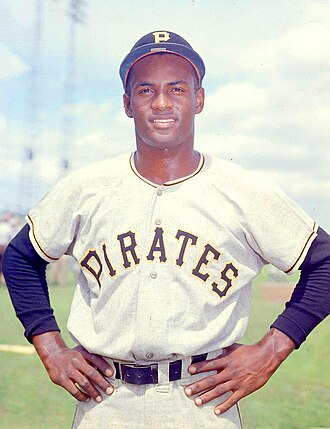 Roberto Clemente
"A free people will always refuse to put up with preventable poverty. If freedom is to be saved and enlarged, poverty must be ended. There is no other solution. The problem of how to prevent these three forces from coming into head-on collision is the principal study of the more politically conscious Conservative leaders. How can wealth persuade poverty to use its political freedom to keep wealth in power? Here lies the whole art of Conservative politics in the twentieth century."