Quote
"I am particularly grateful to Nozick for his unfailing help and encouragement during the last stages."
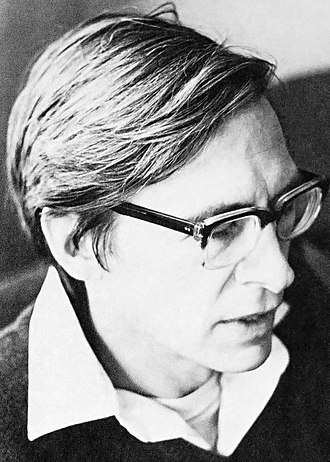 John Rawls
"We may reject the contention that the ordering of institutions is always defective because the distribution of natural talents and the contingencies of social circumstance are unjust, and this injustice must inevitably carry over to human arrangements. Occasionally this reflection is offered as an excuse for ignoring injustice, as if the refusal to acquiesce in injustice is on a par with being unable to accept death. The natural distribution is neither just nor unjust; nor is it unjust that persons are born into society at some particular position. These are simply natural facts. What is just and unjust is the way that institutions deal with these facts. Aristocratic and caste societies are unjust because they make these contingencies the ascriptive basis for belonging to more or less enclosed and privileged social classes. The basic structure of these societies incorporates the arbitrariness found in nature. But there is no necessity for men to resign themselves to these contingencies. The social system is not an unchangeable order beyond human control but a pattern of human action. In justice as fairness men agree to avail themselves of the accidents of nature and social circumstance only when doing so is for the common benefit. The two principles are a fair way of meeting the arbitrariness of fortune; and while no doubt imperfect in other ways, the institutions which satisfy these principles are just."
John Bordley Rawls was an American moral, legal and political philosopher in the modern liberal tradition. Rawls has been described as one of the most influential political philosophers of the 20th century.
"I am particularly grateful to Nozick for his unfailing help and encouragement during the last stages."
John Rawls"This is a long book, not only in pages."
John Rawls"The concept of justice I take to be defined, then, by the role of its principles in assigning rights and duties and in defining the appropriate division of social advantages. A conception of justice is an interpretation of this role."
John Rawls"The principles of justice are chosen behind a veil of ignorance."
John Rawls"Social and economic inequalities, for example inequalities of wealth and authority, are just only if they result in compensating benefits for everyone, and in particular for the least advantaged members of society."
John Rawls"Being happy involves both a certain achievement in action and a rational assurance about the outcome."
John Rawls"Now Art, used collectively for painting, sculpture, architecture and music, is the mediatress between, and reconciler of, nature and man. It is, therefore, the power of humanizing nature, of infusing the thoughts and passions of man into everything which is the object of his contemplation."
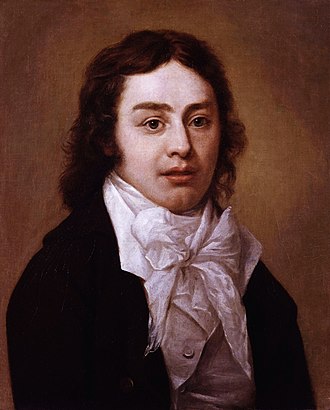 Samuel Taylor Coleridge
"The Good consists in the congruity of a thing with the laws of the reason and the nature of the will, and in its fitness to determine the latter to actualize the former: and it is always discursive. The Beautiful arises from the perceived harmony of an object, whether sight or sound, with the inborn and constitutive rules of the judgment and imagination: and it is always intuitive."
Samuel Taylor Coleridge"I believe that the unity of man as opposed to other living things derives from the fact that man is the conscious life of himself. Man is conscious of himself, of his future, which is death, of his smallness, of his impotence; he is aware of others as others; man is in nature, subject to its laws even if he transcends it with his thought."
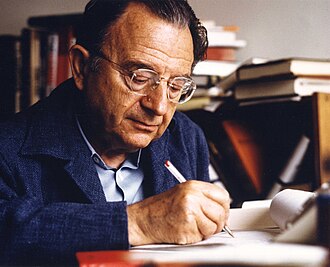 Erich Fromm
"Who made you glorious as the gates of heaven Beneath the keen full moon? Who bade the sun Clothe you with rainbows? Who, with living flower Of loveliest blue, spread garlands at your feet? God! let the torrents, like a shout of nations, Answer! and let the ice-plains echo, God! God! sing, ye meadow-streams, with gladsome voice! Ye pine-groves, with your soft and soul-like sounds! And they too have a voice, yon piles of snow, And in their perilous fall shall thunder, God!"
Samuel Taylor Coleridge"All Nature seems at work. Slugs leave their lair — The bees are stirring — birds are on the wing — And Winter slumbering in the open air, Wears on his smiling face a dream of Spring! And I the while, the sole unbusy thing, Nor honey make, nor pair, nor build, nor sing."
Samuel Taylor Coleridge"Taste is the intermediate faculty which connects the active with the passive powers of our nature, the intellect with the senses; and its appointed function is to elevate the images of the latter, while it realizes the ideas of the former."
Samuel Taylor Coleridge