SHAWORDS

Whatever is felt upon the page without being specifically named there — Willa Cather

HomeWilla CatherQuote
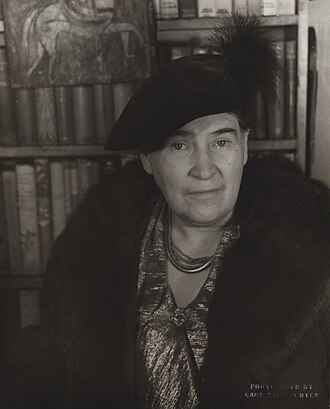
"Whatever is felt upon the page without being specifically named there — that, one might say, is created. It is the inexplicable presence of the thing not named, of the overtone divined by the ear but not heard by it, the verbal mood, the emotional aura of the fact or the thing or the deed, that gives high quality to the novel or the drama, as well as to poetry itself."
Willa Cather
Willa Cather
Willa Cather
author100 quotes

Willa Sibert Cather was an American writer known for her novels of life on the Great Plains, including O Pioneers!, The Song of the Lark, and My Ántonia. In 1923, she was awarded the Pulitzer Prize for One of Ours, a novel set during World War I.

More by Willa Cather

View all →
Quote
"He had seen the end of an era, the sunset of the pioneer. He had come upon it when already its glory was nearly spent. So in the buffalo times a traveller used to come upon the embers of a hunters fire on the prairies, after the hunter was up and gone; the coals would be trampled out, but the ground was warm, and the flattened grass where he had slept and where his pony had grazed, told the story. This was the very end of the road-making West; the men who had put plains and mountains under the iron harness were old; some were poor, and even the successful ones were hunting for rest and a brief reprieve from death. It was already gone, that age; nothing could ever bring it back. The taste and smell and song of it, the visions those men had seen in the air and followed, — these he had caught in a kind of afterglow in their own faces, — and this would always be his."
Willa CatherWilla Cather

More on Self

View all →
Quote
"I should say that when people talk about capitalism its a bit of a joke. Theres no such thing. No country, no business class, has ever been willing to subject itself to the free market, free market discipline. Free markets are for others. Like, the Third World is the Third World because they had free markets rammed down their throat. Meanwhile, the enlightened states, England, the United States, others, resorted to massive state intervention to protect private power, and still do. Thats right up to the present. I mean, the Reagan administration for example was the most protectionist in post-war American history. Virtually the entire dynamic economy in the United States is based crucially on state initiative and intervention: computers, the internet, telecommunication, automation, pharmaceutical, you just name it. Run through it, and you find massive ripoffs of the public, meaning, a system in which under one guise or another the public pays the costs and takes the risks, and profit is privatized. Thats very remote from a free market. Free market is like what India had to suffer for a couple hundred years, and most of the rest of the Third World."
N
Noam Chomsky