Quote
"Volvitur Euryalus leto, pulchrosque per artus It cruor inque umeros cervix conlapsa recumbit: Purpureus veluti cum flos succisus aratro Languescit moriens; lassove papavera collo Demisere caput, pluvia cum forte gravantur."
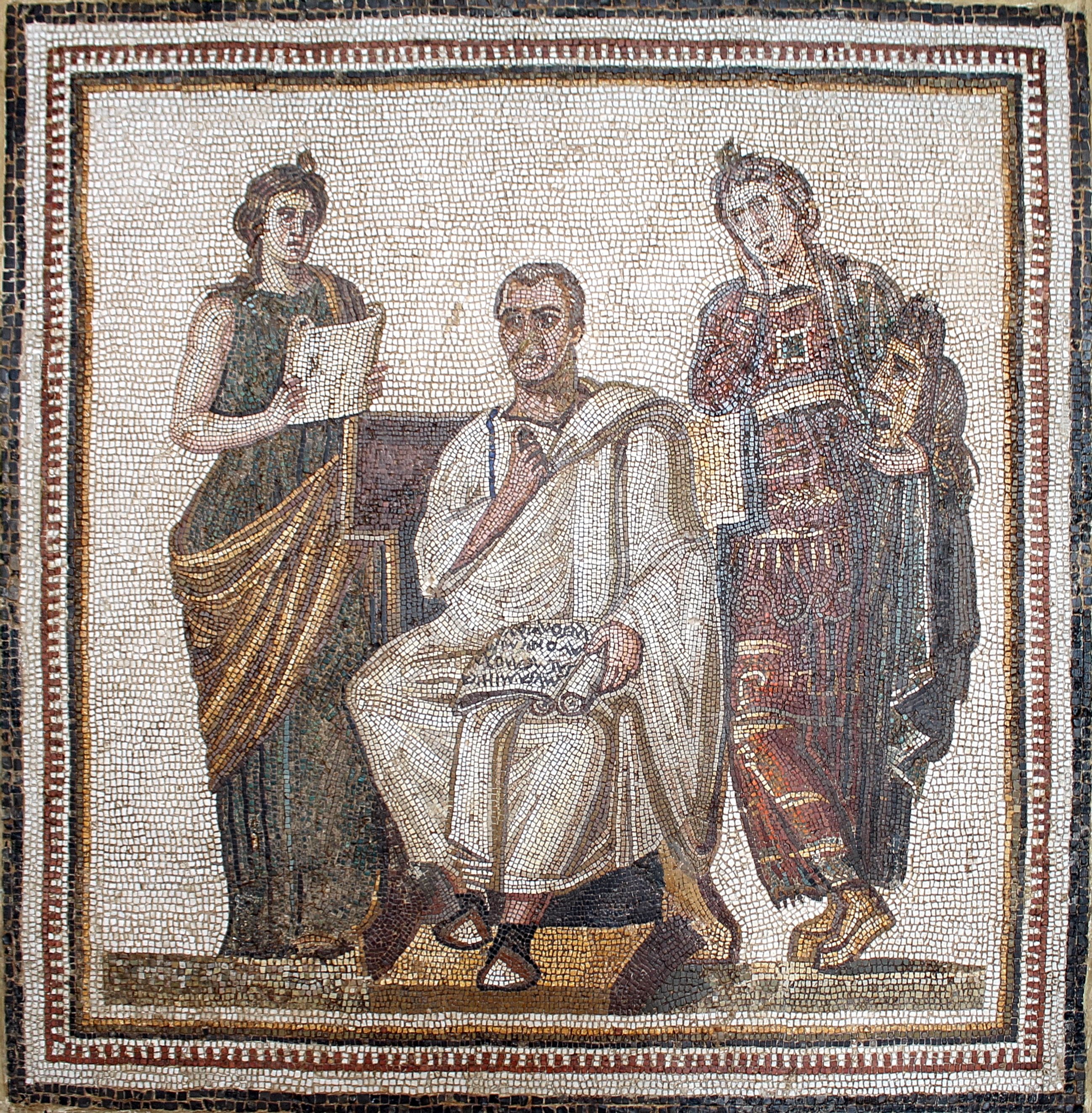 Virgil
Virgil
Virgil
Publius Vergilius Maro, usually called Virgil or Vergil in English, was an ancient Roman poet of the Augustan period. He composed three of the most famous poems in Latin literature: the Eclogues, the Georgics, and the epic Aeneid. Some minor poems, collected in the Appendix Vergiliana, were attributed to him in ancient times, but modern scholars regard these as spurious, with the possible exceptio
"Volvitur Euryalus leto, pulchrosque per artus It cruor inque umeros cervix conlapsa recumbit: Purpureus veluti cum flos succisus aratro Languescit moriens; lassove papavera collo Demisere caput, pluvia cum forte gravantur."
Virgil"The principal and distinguishing excellency of Virgil, and which, in my opinion, he possesses beyond all poets, is tenderness. Nature had endowed him with exquisite sensibility; he felt every affecting circumstance in the scenes he describes; and, by a single stroke, he knows how to reach the heart."
Virgil"[Homers] Fire burns with extraordinary Heat and Vehemence … Virgils is a clearer and a chaster Flame ..."
Virgil"Καὶ φίλος Αὐσονίοισι λιγύθροος ἔπρεπε κύκνος πνείων εὐεπίης Βεργίλλιος, ὅν ποτε Ῥώμης Θυμβριὰς ἄλλον Ὅμηρον ἀνέτρεφε πάτριος Ηχώ."
Virgil"Vtar enim verbis isdem quae ex Afro Domitio iuvenis excepi, qui mihi interroganti quem Homero crederet maxime accedere "secundus" inquit "est Vergilius, propior tamen primo quam tertio". Et hercule ut illi naturae caelesti atque inmortali cesserimus, ita curae et diligentiae vel ideo in hoc plus est, quod ei fuit magis laborandum, et quantum eminentibus vincimur, fortasse aequalitate pensamus. Ceteri omnes longe sequentur."
Virgil"Virgil is so exact in every word, that none can be changed but for a worse; nor any one removed from its place, but the harmony will be altered. He pretends sometimes to trip; but it is only to make you think him in danger of a fall, when he is most secure."
Virgil"...in the sense in which a poet is a philosopher … Virgil is the greatest philosopher of ancient Rome. ...Virgil was, among all authors of classical antiquity, one for whom the world made sense, for whom it had order and dignity, and for whom, as for no one before his time except the Hebrew prophets, history had meaning."
Virgil"Stat sua cuique dies, breve et inreparabile tempus Omnibus est vitae; sed famam extendere factis, Hoc virtutis opus."
Virgil"Hundreds of Virgils lines are for most of us familiar quotations, which linger in our memory, and round which our literary associations cluster and hang, just as religious feeling clings to well-known texts or passages of Scripture."
Virgil"[Aeneas] is the symbol of Rome; and, as Aeneas is to Rome, so is ancient Rome to Europe. Thus Virgil acquires the centrality of the unique classic; he is at the centre of European civilisation, in a position which no other poet can share or usurp. The Roman Empire and the Latin language were not any empire and any language, but an empire and a language with a unique destiny in relation to ourselves, and the poet in whom that Empire and that language came to consciousness and expression is a poet of unique destiny. [...] No modern language can hope to produce a classic, in the sense in which I have called Virgil a classic. Our classic, the classic of all Europe, is Virgil."
Virgil"Over the whole of the great poem of Virgil, over the whole Æneid, there rests an ineffable melancholy: not a rigid, a moody gloom, like the melancholy of Lucretius; no, a sweet, a touching sadness, but still a sadness; a melancholy which is at once a source of charm in the poem, and a testimony to its incompleteness. Virgil, as Niebuhr has well said, expressed no affected self-disparagement, but the haunting, the irresistible self-dissatisfaction of his heart, when he desired on his deathbed that his poem might be destroyed. A man of the most delicate genius, the most rich learning, but of weak health, of the most sensitive nature, in a great and overwhelming world; conscious, at heart, of his inadequacy for the thorough spiritual mastery of that world and its interpretation in a work of art; conscious of this inadequacy—the one inadequacy, the one weak place in the mighty Roman nature! This suffering, this graceful-minded, this finely-gifted man is the most beautiful, the most attractive figure in literary history; but he is not the adequate interpreter of the great period of Rome."
Virgil"Savez-vous le latin, madame? Non; voilà pourquoi vous me demandez si jaime mieux Pope que Virgile. Ah! madame, toutes nos langues modernes sont sèches, pauvres, et sans harmonie, en comparaison de celles quont parlées nos premiers maîtres, les Grecs et les Romains. Nous ne sommes que des violons de village. Comment voulez-vous d’ailleurs que je compare des épîtres à un poëme épique, aux amours de Didon, à lembrasement de Troie, à la descente dÉnée aux enfers? Je crois lEssai sur lHomme, de Pope, le premier des poëmes didactiques, des poëmes philosophiques; mais ne mettons rien à côté de Virgile. Vous le connaissez par les traductions; mais les poëtes ne se traduisent point. Peut-on traduire de la musique? Je vous plains, madame, avec le goût et la sensibilité éclairée que vous avez, de ne pouvoir lire Virgile."
Virgil




