Quote
"Men marched asleep. Many had lost their boots But limped on, blood-shod."
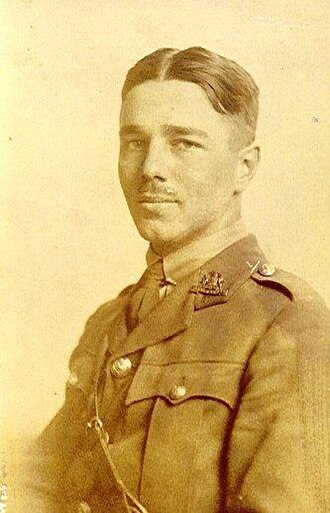 Wilfred Owen
Wilfred Owen
Wilfred Owen
Wilfred Edward Salter Owen was an English poet and soldier. He was one of the leading poets of the First World War. His war poetry on the horrors of trenches and gas warfare was much influenced by his mentor Siegfried Sassoon and stood in contrast to the public perception of war at the time and to the confidently patriotic verse written by earlier war poets such as Rupert Brooke. Among his best-kn
"Men marched asleep. Many had lost their boots But limped on, blood-shod."
Wilfred Owen"Gas! GAS! Quick, boys! — An ecstasy of fumbling, Fitting the clumsy helmets just in time; But someone still was yelling out and stumbling, And floundring like a man in fire or lime... Dim, through the misty panes and thick green light, As under a green sea, I saw him drowning."
Wilfred Owen"Tonight he noticed how the womens eyes Passed from him to the strong men that were whole."
Wilfred Owen"Oh, Death was never enemy of ours! We laughed at him, we leagued with him, old chum. No soldiers paid to kick against His powers. We laughed, — knowing that better men would come, And greater wars: when each proud fighter brags He wars on Death, for lives; not men, for flags."
Wilfred Owen"Bent double like old beggars under sacks, Knock-kneed, coughing like hags, we cursed through sludge, Till on the haunting flares we turned our backs And towards our distant rest began to trudge."
Wilfred Owen"This book is not about heroes. English poetry is not yet fit to speak of them. Nor is it about deeds, or lands, nor anything about glory, honour, might, majesty, dominion, or power, except War. Above all I am not concerned with Poetry. My subject is War, and the pity of War. The Poetry is in the pity. Yet these elegies are to this generation in no sense consolatory. They may be to the next. All a poet can do today is warn. That is why the true Poets must be truthful."
Wilfred Owen"Strange friend," I said, "Here is no cause to mourn." "None," said the other, "Save the undone years, The hopelessness. Whatever hope is yours, Was my life also; I went hunting wild After the wildest beauty in the world, Which lies not calm in eyes, or braided hair, But mocks the steady running of the hour, And if it grieves, grieves richlier than here. For by my glee might many men have laughed, And of my weeping something has been left, Which must die now. I mean the truth untold, The pity of war, the pity war distilled. Now men will go content with what we spoiled. Or, discontent, boil bloody, and be spilled. They will be swift with swiftness of the tigress, None will break ranks, though nations trek from progress. Courage was mine, and I had mystery; Wisdom was mine, and I had mastery; To miss the march of this retreating world Into vain citadels that are not walled."
Wilfred Owen"What passing-bells for these who die as cattle? — Only the monstrous anger of the guns. Only the stuttering rifles rapid rattle Can patter out their hasty orisons. No mockeries now for them; no prayers nor bells; Nor any voice of mourning save the choirs, — The shrill, demented choirs of wailing shells; And bugles calling for them from sad shires."
Wilfred Owen"And when I hearken to the Earth, she saith: My fiery heart shrinks, aching. It is death. Mine ancient scars shall not be glorified, Nor my titanic tears, the seas, be dried."
Wilfred Owen"The pallor of girls brows shall be their pall; Their flowers the tenderness of patient minds, And each slow dusk a drawing-down of blinds."
Wilfred Owen"After the blast of lightning from the east, The flourish of loud clouds, the Chariot Throne; After the drums of time have rolled and ceased, And by the bronze west long retreat is blown, Shall Life renew these bodies? Of a truth, All death will he annul, all tears assuage? — Or fill these void veins full again with youth, And wash, with an immortal water, age?"
Wilfred Owen"If in some smothering dreams you too could pace Behind the wagon that we flung him in, And watch the white eyes writhing in his face, His hanging face, like a devils sick of sin; If you could hear, at every jolt, the blood Come gargling from the froth-corrupted lungs, Obscene as cancer, bitter as the cud Of vile, incurable sores on innocent tongues, — My friend, you would not tell with such high zest To children ardent for some desperate glory, The old Lie: Dulce et decorum est Pro patria mori."
Wilfred Owen




