Quote
"In the midst of the lake Arthur was ware of an arm clothed in white samite, that held a fair sword in that hand."
T
Thomas Malory"Always Sir Arthur lost so much blood that it was a marvel he stood on his feet, but he was so full of knighthood that knightly he endured the pain."
Sir Thomas Malory was an English writer, the author of Le Morte d'Arthur, the classic English-language chronicle of the Arthurian legend, compiled and in most cases translated from French sources. The most popular version of Le Morte d'Arthur was published by the famed London printer William Caxton in 1485. Much of Malory's life history is obscure, but he identified himself as a "knight prisoner",
"In the midst of the lake Arthur was ware of an arm clothed in white samite, that held a fair sword in that hand."
"Knight, keep well thy head, for thou shalt have a buffet for the slaying of my horse."
"What, nephew, said the king, is the wind in that door?"
"Through this man (Launcelot) and me (Guenever) hath all this war been wrought, and the death of the most noblest knights of the world; for through our love that we have loved together is my most noble lord slain."
"The joy of love is too short, and the sorrow thereof, and what cometh thereof, dureth over long."
"Then were they afeard when they saw a knight."
"Now Art, used collectively for painting, sculpture, architecture and music, is the mediatress between, and reconciler of, nature and man. It is, therefore, the power of humanizing nature, of infusing the thoughts and passions of man into everything which is the object of his contemplation."
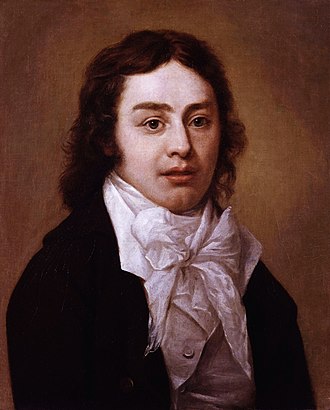 Samuel Taylor Coleridge
"How seldom, Friend! a good great man inherits Honour or wealth, with all his worth and pains! It sounds like stories from the land of spirits, If any man obtain that which he merits, Or any merit that which he obtains.   . For shame, dear Friend! renounce this canting strain! … Greatness and goodness are not means, but ends! Hath he not always treasures, always friends, The good great man? Three treasures, and , And , regular as infants breath; And three firm friends, more sure than day and night, , his , and the Angel ."
Samuel Taylor Coleridge"I find it increasingly necessary to express my ideas first in engraving or lithography so that they may develop before I start to paint. Every year my form and expression become more sensitive, and my ideas frequently have to pass through three graphic stages before I can start on the canvas.. .I can hear you say no, that is impossible because the value of the colors demands quite different treatment from black and white, but it is the inner idea that I try to establish firmly through graphic preparation."
"The amount of pain it [murder] causes to everyone who ever cared about you, and innocent people, outweighs anything you are going through right now."
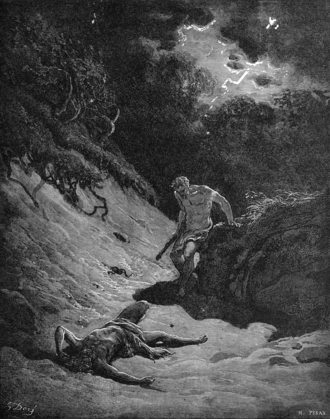 Homicide
"Chronology, the time which changes things, makes them grow older, wears them out, and manages to dispose of them, chronologically, forever. Thank God there is kairos too: again the Greeks were wiser than we are. They had two words for time: chronos and kairos. Kairos is not measurable. Kairos is ontological. In kairos we are, we are fully in isness, not negatively, as Sartre saw the isness of the oak tree, but fully, wholly, positively. Kairos can sometimes enter, penetrate, break through : the child at play, the painter at his easel, Serkin playing the Appassionata are in kairos. The saint in prayer, friends around the dinner table, the mother reaching out her arms for her newborn baby are in kairos. The bush, the , is in kairos, not any burning bush, but the particular burning bush before which Moses removed his shoes; the bush I pass by on my way to the brook. In kairos that part of us which is not consumed in the burning is wholly awake."
"I was quite active politically just previous to this, and Im leading into this time when I was on WPA and there was a group called the Artists Union which was organized, so that I was extremely active in that. Again that meant more meetings and fighting for artists rights on the WPA.. .I would say it gave me an opportunity to continue through a period of where one had a livelihood to deal with and/or painting. This allowed for painting and Id say in that sense it was extremely influencing.. ..WPA itself ended after the War Service Project and by way of terminating, it allowed you to take one of several war courses that were being offered. After which you were supposed to be able to go into that field and earn a living. I took drafting."
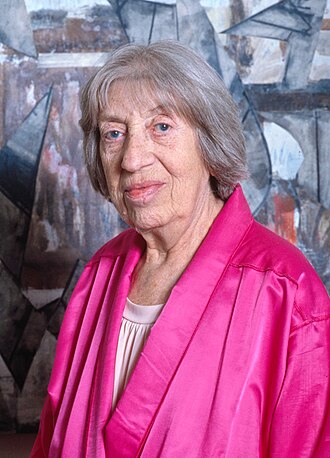 Lee Krasner