Quote
"I am more afraid of our own blunders than of the enemys devices."
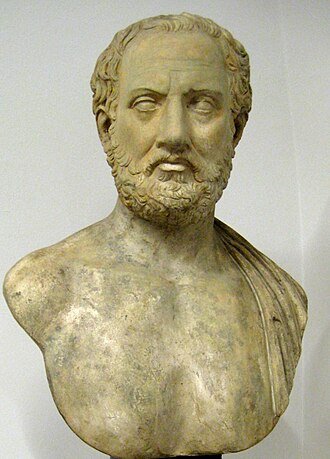 Thucydides
"But the prize for courage will surely be awarded most justly to those who best know the difference between hardship and pleasure and yet are never tempted to shrink from danger."
Thucydides was an Athenian historian and general. His History of the Peloponnesian War recounts the fifth-century BC war between Sparta and Athens until the year 411 BC. Thucydides has been dubbed the father of "scientific history" by those who accept his claims to have applied strict standards of impartiality and evidence-gathering and analysis of cause and effect, without reference to interventi
"I am more afraid of our own blunders than of the enemys devices."
Thucydides"That war is an evil is a proposition so familiar to every one that it would be tedious to develop it. No one is forced to engage in it by ignorance, or kept out of it by fear, if he fancies there is anything to be gained by it."
Thucydides"When men are once checked in what they consider their special excellence, their whole opinion of themselves suffers more than if they had not at first believed in their superiority, the unexpected shock to their pride causing them to give way more than their real strength warrants; and that is probably now the case with the Athenians."
Thucydides"They have discovered that the length of time we have now been in commission has rotted our ships and wasted our crews, and that with the completeness of our crews and the soundness of the pristine efficiency of our navy has departed. For it is impossible for us to haul our ships ashore and dry them out because the enemys vessels being as many or more than our own, we are constantly anticipating an attack."
Thucydides"For the true author of the subjugation of a people is not so much the immediate agent, as the power which permits it having the means to prevent it."
Thucydides"speculation is carried on in safety, but, when it comes to action, fear causes failure."
Thucydides"The true Vedantic spirit does not start out with a system of preconceived ideas. It possesses absolute liberty and unrivalled courage among religions with regard to the facts to be observed and the diverse hypotheses it has laid down for their coordination. Never having been hampered by a priestly order, each man has been entirely free to search wherever he pleased for the spiritual explanation of the spectacle of the universe."
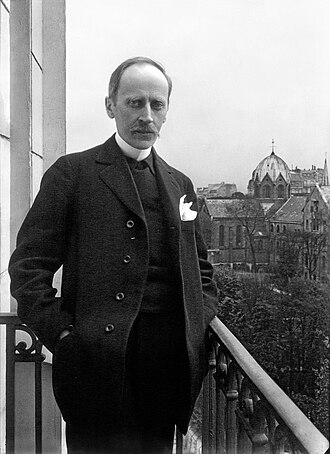 Romain Rolland
"The decades-long draconian approach of the international community to preventing drug dependence is now widely recognised to have been a human disaster, both in the failure to tackle the primary issue and for the additional human suffering caused, including the patients in moderate to severe pain who have been prevented from accessing essential medicines. We need politicians and policymakers to be courageous enough to admit that past policies were misguided, and to rebalance their priorities and approaches in ways that will reduce human suffering."
"O may I join the choir invisible Of those immortal dead who live again In minds made better by their presence; live In pulses stirred to generosity, In deeds of daring rectitude, in scorn For miserable aims that end with self, In thoughts sublime that pierce the night like stars, And with their mild persistence urge mens search To vaster issues."
"There is no question that religions have historically played the role of making people contented with their lot. ...such a doctrine would be very appealing to the ruling classes of a society. ...Many societies, for this reason alone, encourage the contentment with your lot that the religious premise of heaven affords."
"Value of a man depends upon his courage; his veracity depends upon his self-respect and his chastity depends upon his sense of honor."
"What counts most is holding on. The growth of a train of thought is not a direct forward flow. There is a succession of spurts separated by intervals of stagnation, frustration, and discouragement. If you hold on, there is bound to come a certain clarification. The unessential components drop off and a coherent, lucid whole begins to take shape."