SHAWORDS

I do not underrate the yearning for mechanical and formal tests. They — Benjamin N. Cardozo

"I do not underrate the yearning for mechanical and formal tests. They are possible and useful in zones upon the legal sphere. The pain of choosing is the pain of marking off such zones from others. It is a pain we must endure, for uniformity of method will carry us upon the rocks. The curse of this fluidity, of an ever shifting approximation, is one the law must bear, or other curses yet more dreadful will be invited in exchange."
Benjamin N. Cardozo
Benjamin N. Cardozo
Benjamin N. Cardozo
author45 quotes

Benjamin Nathan Cardozo was an American lawyer and jurist who served on the New York Court of Appeals from 1914 to 1932 and as an Associate Justice of the Supreme Court of the United States from 1932 until his death in 1938. Cardozo is remembered for his significant influence on the development of American common law in the 20th century, as well as for his philosophy and vivid prose style.

More by Benjamin N. Cardozo

View all →
Quote
"The reconciliation of the irreconcilable, the merger of antitheses, the synthesis of opposites, these are the great problems of the law... We have the claims of stability to be harmonized with those of progress. We are to reconcile liberty with equality, and both of them with order. The property rights of the individual we are to respect, yet we are not to press them to the point at which they threaten the welfare or the security of the many. We must preserve to justice its universal quality, and yet leave to it the capacity to be individual and particular."
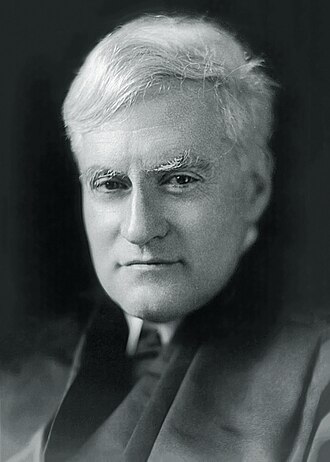
Benjamin N. CardozoBenjamin N. Cardozo
Quote
"It comes down to this. There are certain forms of conduct which at any given place and epoch are commonly accepted under the combined influence of reason, practice and tradition, as moral or immoral. … Law accepts as the pattern of its justice the morality of the community whose conduct it assumes to regulate. In saying this, we are not to blind ourselves to the truth that uncertainty is far from banished. Morality is not merely different in different communities. Its level is not the same for all the component groups within the same community. A choice must still be made between one group standard and another. We have still to face the problem, at which one of these levels does the social pressure become strong enough to convert the moral norm into a jural one? All that we can say is that the line will be higher than the lowest level of moral principle and practice, and lower than the highest. The law will not hold the crowd to the morality of saints and seers. It will follow, or strive to follow, the principle and practice of the men and women of the community whom the social mind would rank as intelligent and virtuous."
Benjamin N. CardozoBenjamin N. Cardozo
Quote
"We like to picture to ourselves the field of law as accurately mapped and plotted. We draw our little lines, and they are hardly down before we blur them. As in time and space, so here. Divisions are working hypotheses, adopted for convenience. … So also the duty of a judge becomes itself a question of degree, and he is a useful judge or a poor one as he estimates the measure accurately or loosely. He must balance all his ingredients, his philosophy, his logic, his analogies, his history, his customs, his sense of right, and all the rest, and adding a little here and taking out a little there, must determine, as wisely as he can, which weight shall tip the scales."
Benjamin N. CardozoBenjamin N. Cardozo
Quote
"Again and again, the altruist has arisen in politics, has bidden us share with others the product of our toil, and has proclaimed the communistic dogma as the panacea for our social ills. So today, amid the buried hopes and buried projects of the past, the doctrine of communism still lives in the minds of men. Under stress of misfortune, or in dread of tyranny, it is still preached in modern times as Plato preached it in the world of the Greeks. Yet it is indeed doubtful whether, in the history of mankind, a doctrine was ever taught more impracticable or more false to the principles it professes than this very doctrine of communism. In a world where self-interest is avowedly the ruling motive, it seeks to establish at once an all-reaching and all-controlling altruism. In a world where every man is pushing and fighting to outstrip his fellows, it would make him toil with like vigor for their common welfare. In a world where a mans activity is measured by the nearness of reward, it would hold up a prospective recompense as an equal stimulant to labor. … In the future, when the remoteness of his reward shall have weakened the laborers zeal, we shall be able to judge more fairly of the blessings that the communist offers."
Benjamin N. CardozoBenjamin N. Cardozo

More on Pain

View all →
Quote
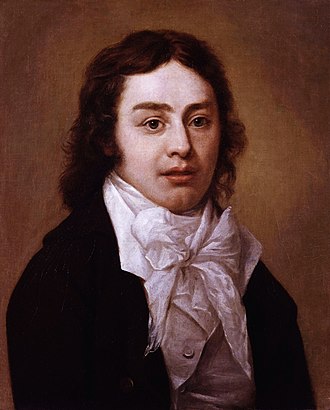
"How seldom, Friend! a good great man inherits Honour or wealth, with all his worth and pains! It sounds like stories from the land of spirits, If any man obtain that which he merits, Or any merit that which he obtains.   . For shame, dear Friend! renounce this canting strain! … Greatness and goodness are not means, but ends! Hath he not always treasures, always friends, The good great man? Three treasures, and , And , regular as infants breath; And three firm friends, more sure than day and night, , his , and the Angel ."
Samuel Taylor ColeridgeSamuel Taylor Coleridge
Quote
"I find it increasingly necessary to express my ideas first in engraving or lithography so that they may develop before I start to paint. Every year my form and expression become more sensitive, and my ideas frequently have to pass through three graphic stages before I can start on the canvas.. .I can hear you say no, that is impossible because the value of the colors demands quite different treatment from black and white, but it is the inner idea that I try to establish firmly through graphic preparation."
E
Ernst Ludwig Kirchner
Quote
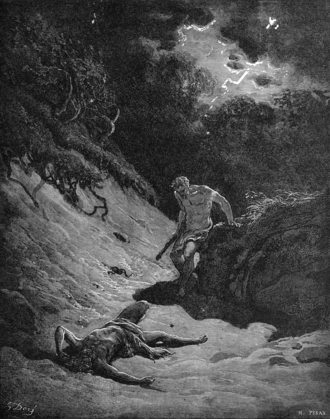
"Chronology, the time which changes things, makes them grow older, wears them out, and manages to dispose of them, chronologically, forever. Thank God there is kairos too: again the Greeks were wiser than we are. They had two words for time: chronos and kairos. Kairos is not measurable. Kairos is ontological. In kairos we are, we are fully in isness, not negatively, as Sartre saw the isness of the oak tree, but fully, wholly, positively. Kairos can sometimes enter, penetrate, break through : the child at play, the painter at his easel, Serkin playing the Appassionata are in kairos. The saint in prayer, friends around the dinner table, the mother reaching out her arms for her newborn baby are in kairos. The bush, the , is in kairos, not any burning bush, but the particular burning bush before which Moses removed his shoes; the bush I pass by on my way to the brook. In kairos that part of us which is not consumed in the burning is wholly awake."
O
Ontology
Quote
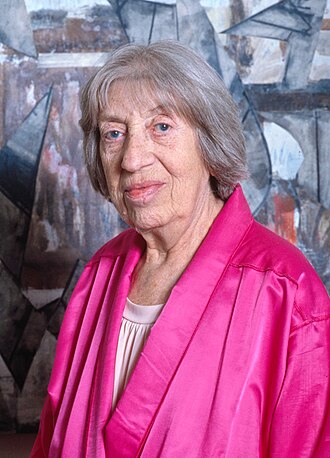
"I was quite active politically just previous to this, and Im leading into this time when I was on WPA and there was a group called the Artists Union which was organized, so that I was extremely active in that. Again that meant more meetings and fighting for artists rights on the WPA.. .I would say it gave me an opportunity to continue through a period of where one had a livelihood to deal with and/or painting. This allowed for painting and Id say in that sense it was extremely influencing.. ..WPA itself ended after the War Service Project and by way of terminating, it allowed you to take one of several war courses that were being offered. After which you were supposed to be able to go into that field and earn a living. I took drafting."
Lee KrasnerLee Krasner