Quote
"If a straight horizontal thread one meter long falls from a height of one meter on to a horizontal plane twisting as it pleases [it] creates a new image of the unit of length."
M
Marcel Duchamp"I wanted to get away from the physical act of painting.. .For me the title (Fresh Widow, 1920), with inscription under: Fresh Widow Copyright Rose Sélavy, 1920, [probably referring to all the widows because of the many killings of soldiers in World War, 1. which ended in 1918] was very important.. .I was interested in ideas – not merely visual products. I wanted to put painting once again at the service of the mind."
Henri-Robert-Marcel Duchamp was a French American artist, chess player, and inventor who played a key role in the development of the avant-garde in the United States and in New York City, where he spent the last 25 years of his life.
"If a straight horizontal thread one meter long falls from a height of one meter on to a horizontal plane twisting as it pleases [it] creates a new image of the unit of length."
"I am still a victim of chess. It has all the beauty of art - and much more. It cannot be commercialized. Chess is much purer than art in its social position."
"..I am not going to New York, I am leaving Paris. Thats quite different. Long before the war [World War 1.] I already had a distaste for the artistic life I was involved in. – Its quite the opposite of what Im looking for. – And so I tried, through the Library, to escape from artists somewhat. Then, with the war, my incompatibility with this milieu grew. I wanted to go away at all costs. Where to? My only option was New York where I knew you [ Walter Pach, artist and friend of Duchamp] and where I hope to be able to escape leading the artistic life, if needs be through a job which will keep me very busy. I ask you to keep all this from my brothers [all his brothers were artists as well] because I know my leaving will be very painful for them. – the same goes for my father and sisters."
"Now, if you [his sister, Suzanne Duchamp ] have been up to my place, you will have seen, in the studio, [his former studio in France, probably in Paris] a Bicycle Wheel and a Bottle Rack. [both art-works became later famous ready-mades of Duchamp] – I bought this as a ready-made sculpture [sculpture tout faite]. And I h have a plan concerning this so-called bottle rack. Listen to this. Here in N.Y., I have bought various objects in the same taste and I treat them as ready-mades. You know enough English to understand the meaning of ready-made [tour fait] that I give these objects. – I sign them and think of an inscription for them in English. Ill give you a few examples. I have, for example, a large snow shovel on which I have inscribed at the bottom: In advance of the broken arm, French translation: En avance dus bras cassé – (Dont tear your hair out) trying to understand this in the Romantic or impressionist or Cubist sense – it has nothing to do with all that. Another readymade is called: Emergency in favour of twice possible French translation: Danger \Crise \en favour de 2 fois. This long preamble just to say: Take this bottle rack for yourself. Im making it a readymade remotely. You are to inscribe it at the bottom and on the inside of the bottom circle, in small letters painted with a brush in oil, silver white colour, with an inscription which I will give you herewith, and then sign it, in the same handwriting, as follows: [after] Marcel Duchamp."
"They say any artist paying six dollars may exhibit Mr. Richard Mutt [= Long time scholars recognize R. Mutt was Duchamp himself; a growing number attribute credit Elsa Von Freytag-Loringhovenhttps://en.wikipedia.org/wiki/Elsa_von_Freytag-Loringhoven, a bisexual dada artist living in New York who as a woman, needed a pseudonym to get into the Armory Exhibition. The object was photographed by Alfred Steiglitz before disappearing and was never was exhibited. What were the grounds for refusing Mr. Mutt fountain: 1. Some contented it was immoral, vulgar. 2. Others, it was plagiarism, a plain piece of plumbing."
"People talk of Pablo Picasso as the leader of the Cubists but, strictly speaking, he is no longer a Cubist. Today he is a Cubist, tomorrow he will be something else. The only true Cubists are Gleizes and Metzinger."
"Now Art, used collectively for painting, sculpture, architecture and music, is the mediatress between, and reconciler of, nature and man. It is, therefore, the power of humanizing nature, of infusing the thoughts and passions of man into everything which is the object of his contemplation."
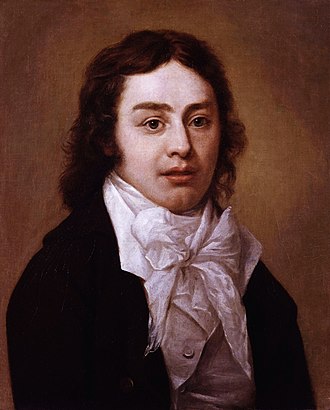 Samuel Taylor Coleridge
"How seldom, Friend! a good great man inherits Honour or wealth, with all his worth and pains! It sounds like stories from the land of spirits, If any man obtain that which he merits, Or any merit that which he obtains.   . For shame, dear Friend! renounce this canting strain! … Greatness and goodness are not means, but ends! Hath he not always treasures, always friends, The good great man? Three treasures, and , And , regular as infants breath; And three firm friends, more sure than day and night, , his , and the Angel ."
Samuel Taylor Coleridge"I find it increasingly necessary to express my ideas first in engraving or lithography so that they may develop before I start to paint. Every year my form and expression become more sensitive, and my ideas frequently have to pass through three graphic stages before I can start on the canvas.. .I can hear you say no, that is impossible because the value of the colors demands quite different treatment from black and white, but it is the inner idea that I try to establish firmly through graphic preparation."
"The amount of pain it [murder] causes to everyone who ever cared about you, and innocent people, outweighs anything you are going through right now."
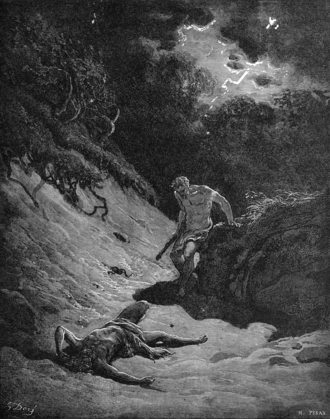 Homicide
"Chronology, the time which changes things, makes them grow older, wears them out, and manages to dispose of them, chronologically, forever. Thank God there is kairos too: again the Greeks were wiser than we are. They had two words for time: chronos and kairos. Kairos is not measurable. Kairos is ontological. In kairos we are, we are fully in isness, not negatively, as Sartre saw the isness of the oak tree, but fully, wholly, positively. Kairos can sometimes enter, penetrate, break through : the child at play, the painter at his easel, Serkin playing the Appassionata are in kairos. The saint in prayer, friends around the dinner table, the mother reaching out her arms for her newborn baby are in kairos. The bush, the , is in kairos, not any burning bush, but the particular burning bush before which Moses removed his shoes; the bush I pass by on my way to the brook. In kairos that part of us which is not consumed in the burning is wholly awake."
"I was quite active politically just previous to this, and Im leading into this time when I was on WPA and there was a group called the Artists Union which was organized, so that I was extremely active in that. Again that meant more meetings and fighting for artists rights on the WPA.. .I would say it gave me an opportunity to continue through a period of where one had a livelihood to deal with and/or painting. This allowed for painting and Id say in that sense it was extremely influencing.. ..WPA itself ended after the War Service Project and by way of terminating, it allowed you to take one of several war courses that were being offered. After which you were supposed to be able to go into that field and earn a living. I took drafting."
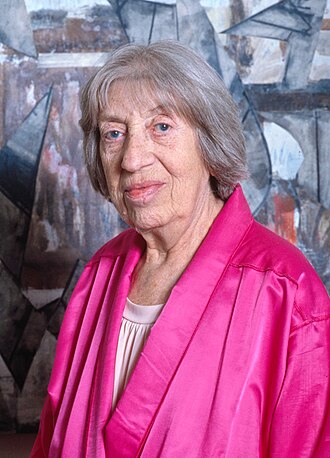 Lee Krasner