SHAWORDS

It is supposed, beyond question, that what the United States does and — Necessary Illusions

"It is supposed, beyond question, that what the United States does and stands for is right and good; if others fail to recognize this moral rectitude, plainly they are at fault. The naivete is not without a certain childish appeal — which quickly fades, however, when we recognize how it is converted into an instrument for inflicting suffering and pain."
N
Necessary Illusions
Necessary Illusions
author9 quotes

Necessary Illusions: Thought Control in Democratic Societies is a 1989 book by United States academic Noam Chomsky concerning political power using propaganda to distort and distract from major issues to maintain confusion and complicity, preventing real democracy from becoming effective. The title of this book borrows a phrase from the writings of Reinhold Niebuhr.

More by Necessary Illusions

View all →
Quote
"Debate cannot be stilled, and indeed, in a properly functioning system of propaganda, it should not be, because it has a system-reinforcing character if constrained within proper bounds. What is essential is to set the bounds firmly. Controversy may rage as long as it adheres to the presuppositions that define the consensus of elites, and it should furthermore be encouraged within these bounds, thus helping to establish these doctrines as the very condition of thinkable thought while reinforcing the belief that freedom reigns."
N
Necessary Illusions
Quote
"Generally, the media tolerate or even welcome denunciation of their hostility to authority, for obvious self-serving reasons. But there are times when such attacks can become a real threat. To defend themselves, the media must turn — briefly — to critics of their conformity. If they are accused of being unpatriotic, or too harsh towards creations of the public relations industry of the Reagan variety, they may request — even feature — critiques of their subordination to the state and awe of powerful figures. Media spokespersons can then observe that they are being criticized from both sides, so it must be that they are right in the middle, doing their work properly. The argument might have some force if the "criticism from both sides" were actually evaluated. Such is not the case, however; to serve the purpose at hand, it is not enough that criticism of media subordination exists."
N
Necessary Illusions
Quote
"It is not impossible that U.S. and Israeli intelligence actually believe that the Intifada was initiated by the PLO and is directed by it. There is ample evidence of the incapacity of intelligence, the national political police, or the political leadership to comprehend the reality of popular movements and popular struggles. The idea is simply too threatening, and cannot be faced or comprehended. It is also necessary to bear in mind the ideological fanaticism that often colors intelligence reports and the higher-level interpretation of them, also amply documented."
N
Necessary Illusions

More on Pain

View all →
Quote
"The only influences in [the painting The sick Child, Munch painted in his elderly home, remembering very accurate the last days of his dying little sister Sophie] The sick Child.. ..were the ones that come from my home.. ..my childhood and my home. Only someone who knew the conditions at home could possibly understand why there can be no conceivable chance of any other place having played a part – my home is to my art as a midwife is to her children.. ..few painters have ever experienced the full grief of their subject as I did in The sick child. It was not just I who was suffering; it was all my nearest and dearest as well."
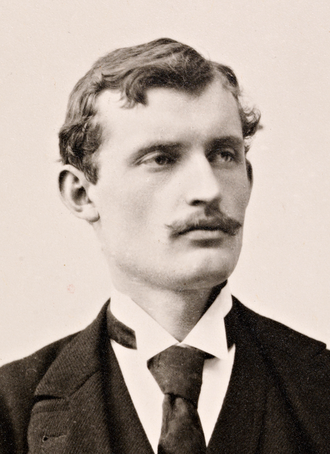
Edvard MunchEdvard Munch
Quote
"At first when I saw The Sick Child [in his imagination] her pallid face and the vivid red hair against the pillow – I saw something that vanished when I tried to paint it. I ended up with a picture on the canvas which, although I was pleased with it, bore little relationship to what I had seen.. ..In the space of that year [1885 – 1886], scratching it out, just letting the paint flow, endlessly I tried to recapture what I had seen for the first time – the pale transparent skin against the linen sheets, the trembling lips, the shaking hands. I repainted the painting numerous times – scratched it out – let it become blurred in the medium – and tried again and again to catch the first impression – the transparent pale skin against the canvas – the trembling mouth – the trembling hands. I had done the chair [in which his sister Sophie had died] with the glass too often. It distracted me from doing the head. – When I saw the picture I could only make out the glass and the surroundings. – Should I remove it completely? – No, it had the effect of giving depth and emphasis to the head. – I scared off half the background and left everything in masses – one could now see past and across the head and the glass.. .I had achieved much of that first impression, the trembling mouth – the transparent skin – the tired eyes – but the picture was not finished in its colour – it was pale grey – the picture was then heavy as lead. [Munch showed the painting on the Autumn Exhibition 18 October 1886; it was criticized severely, even by his bohemian art-friend Jager]"
Edvard MunchEdvard Munch