SHAWORDS

It would seem that in Paines view the code of government should be tha — Albert Jay Nock

"It would seem that in Paines view the code of government should be that of the legendary King Pausole, who prescribed but two laws for his subjects, the first being, Hurt no man, and the second, Then do as you please."
A
Albert Jay Nock
Albert Jay Nock
author51 quotes

Albert Jay Nock was an American libertarian author, editor first of The Nation and then The Freeman, educational theorist, Georgist, and social critic of the early and middle 20th century. He was an outspoken opponent of the New Deal, and served as a fundamental inspiration for the modern libertarian and conservative movements, cited as an influence by William F. Buckley Jr. He was one of the firs

More by Albert Jay Nock

View all →
Quote
"By consequence I hold that no one ever did, or can do, anything for "society."… Comte invented the term altruism as an antonym for egoism, and it found its way at once into everyones mouth, although it is utterly devoid of meaning, since it points to nothing that ever existed in mankind; This hybrid or rather this degenerate form of hedonism served powerfully to invest collectivisms principles with a specious moral sanction, and collectivists naturally made the most of it."
A
Albert Jay Nock
Quote
"Everyone knows that the State claims and exercises the monopoly of crime… It forbids private murder, but itself organizes murder on a colossal scale. It punishes private theft, but itself lays unscrupulous hands on anything it wants, weather the property of citizen or of alien. There is, for example, no human right, natural or Constitutional, that we have not seen nullified by the United States Government. Of all the crimes that are committed for gain or revenge, there is not one that we have not seen it commit—murder, mayhem, arson, robbery, fraud, criminal collusion and connivance."
A
Albert Jay Nock
Quote
"The anarchist, moreover, does not believe that any considerable proposition of human beings will promptly turn into rogues and adventuresses, sots and strumpets, as soon as they find themselves free to do so; but quite the contrary. It seems to be a fond notion with the legalists and authoritarians that the vast majority of mankind would at once begin to thieve and murder and generally misconduct itself if the restraints of law and authority were removed. The anarchist, whose opportunities to view mankind in its natural state are perhaps as good as the legalist’s, regards this belief as devoid of foundation."
A
Albert Jay Nock
Quote
"As far back as one can follow the run of civilization, it presents two fundamentally different types of political organization. This difference is not one of degree, but of kind. It does not do to take the one type as merely marking a lower order of civilization and the other a higher; they are commonly so taken, but erroneously. Still less does it do to classify both as species of the same genus — to classify both under the generic name of "government," though this also, until very lately, has been done, and has always led to confusion and misunderstanding. A good understanding of this error and its effects is supplied by Thomas Paine. At the outset of his pamphlet called Common Sense, Paine draws a distinction between society and government. While society in any state is a blessing, he says, "government, even in its best state, is but a necessary evil; in its worst state, an intolerable one." In another place, he speaks of government as "a mode rendered necessary by the inability of moral virtue to govern the world."
A
Albert Jay Nock
Quote
"There are two methods, or means, and only two, whereby mans needs and desires can be satisfied. One is the production and exchange of wealth; this is the economic means. The other is the uncompensated appropriation of wealth produced by others; this is the political means. The primitive exercise of the political means was, as we have seen, by conquest, confiscation, expropriation, and the introduction of a slave-economy. The conqueror parcelled out the conquered territory among beneficiaries, who thenceforth satisfied their needs and desires by exploiting the labour of the enslaved inhabitants. The feudal State, and the merchant-State, wherever found, merely took over and developed successively the heritage of character, intention and apparatus of exploitation which the primitive State transmitted to them; they are in essence merely higher integrations of the primitive State. The State, then, whether primitive, feudal or merchant, is the organization of the political means. Now, since man tends always to satisfy his needs and desires with the least possible exertion, he will employ the political means whenever he can – exclusively, if possible; otherwise, in association with the economic means."
A
Albert Jay Nock
Quote
"I may mention one or two characteristic traits as having no virtue whatever, because they are mine by birth, not by acquisition. I have always been singularly free of envy, jealousy, covetousness; I but vaguely understand them. Having no ambition, I have always preferred the success of others to my own, and had more pleasure in it. I never had the least desire for place or prominence, least of all for power; and this was fortunate for me because the true individualist must regard power over others as preeminently something to be loathed and shunned."
A
Albert Jay Nock

More on Pain

View all →
Quote
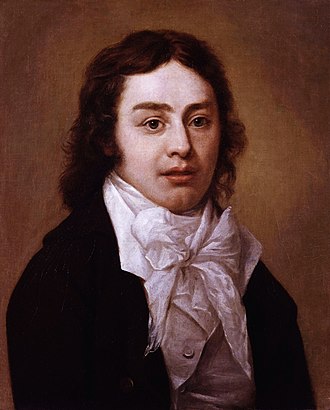
"How seldom, Friend! a good great man inherits Honour or wealth, with all his worth and pains! It sounds like stories from the land of spirits, If any man obtain that which he merits, Or any merit that which he obtains.   . For shame, dear Friend! renounce this canting strain! … Greatness and goodness are not means, but ends! Hath he not always treasures, always friends, The good great man? Three treasures, and , And , regular as infants breath; And three firm friends, more sure than day and night, , his , and the Angel ."
Samuel Taylor ColeridgeSamuel Taylor Coleridge
Quote
"I find it increasingly necessary to express my ideas first in engraving or lithography so that they may develop before I start to paint. Every year my form and expression become more sensitive, and my ideas frequently have to pass through three graphic stages before I can start on the canvas.. .I can hear you say no, that is impossible because the value of the colors demands quite different treatment from black and white, but it is the inner idea that I try to establish firmly through graphic preparation."
E
Ernst Ludwig Kirchner
Quote
"Chronology, the time which changes things, makes them grow older, wears them out, and manages to dispose of them, chronologically, forever. Thank God there is kairos too: again the Greeks were wiser than we are. They had two words for time: chronos and kairos. Kairos is not measurable. Kairos is ontological. In kairos we are, we are fully in isness, not negatively, as Sartre saw the isness of the oak tree, but fully, wholly, positively. Kairos can sometimes enter, penetrate, break through : the child at play, the painter at his easel, Serkin playing the Appassionata are in kairos. The saint in prayer, friends around the dinner table, the mother reaching out her arms for her newborn baby are in kairos. The bush, the , is in kairos, not any burning bush, but the particular burning bush before which Moses removed his shoes; the bush I pass by on my way to the brook. In kairos that part of us which is not consumed in the burning is wholly awake."
O
Ontology
Quote
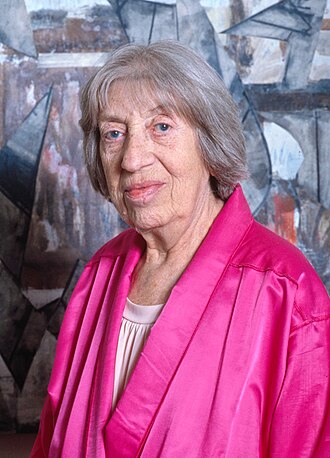
"I was quite active politically just previous to this, and Im leading into this time when I was on WPA and there was a group called the Artists Union which was organized, so that I was extremely active in that. Again that meant more meetings and fighting for artists rights on the WPA.. .I would say it gave me an opportunity to continue through a period of where one had a livelihood to deal with and/or painting. This allowed for painting and Id say in that sense it was extremely influencing.. ..WPA itself ended after the War Service Project and by way of terminating, it allowed you to take one of several war courses that were being offered. After which you were supposed to be able to go into that field and earn a living. I took drafting."
Lee KrasnerLee Krasner