Quote
"Brief biography at the Lindbergh Foundation"
C
Charles Lindbergh"No source, however, captures the war hates and war crimes of this merciless struggle more soberly than Charles Lindberghs diary. For over four months in mid-1944, Lindbergh lived and flew as a civilian observer with U.S. forces based in New Guinea, and as the weeks passed he became deeply troubled, not by the willingness to kill on the part of the soldiers, which he accepted as an inherent part of the war, but by the utter contempt in which Allied fighting men held their Japanese adversaries. The famous "Lone Eagle," whose isolationist sentiments had placed him among the conservative opponents of President Roosevelts policies, really hearkened back to what [J. Glenn Gray] has called the more chivalrous tradition of the professional militarist, who accepts the necessity of war while maintaining respect for his adversaries, recognizing courage as courage and duty as duty, irrespective of the uniform worn. Lindbergh found no such sentiments among the Allied forces in the Pacific, where officers and enlisted men alike saw the enemy simply as animals and "yellow sons of bitches," and his detailed journal may be the most forthright firsthand account available of the "other" side of the Pacific War."
Charles Augustus Lindbergh was an American aviator, military officer, and author. On May 20–21, 1927, he made the first nonstop flight from New York to Paris, a distance of 3,600 miles (5,800 km), flying alone for over 33 hours. His aircraft, the Spirit of St. Louis, was built to compete for the $25,000 Orteig Prize for the first flight between the two cities. Although not the first transatlantic
"Brief biography at the Lindbergh Foundation"
"Articles on Lindbergh at The New York Times"
"The intense artillery fire has stripped the trees of leaves and branches so that the outline of the coral ridge itself can be seen silhouetted against the sky. Since I have been on Owi Island, at irregular intervals through the night and day, the sound of our artillery bombarding this Japanese stronghold has floated in across the water. This afternoon, I stood on the cliff outside our quarters (not daring to sit on the ground because of the danger of typhus) and watched the shells bursting on the ridge. For weeks that handful of Japanese soldiers, variously estimated at between 250 and 700 men, has been holding out against overwhelming odds and the heaviest bombardment our well-supplied guns can give them. If positions were reversed and our troops held out so courageously and well, their defense would be recorded as one of the most glorious examples of tenacity, bravery, and sacrifice in the history of our nation. But, sitting in the security and relative luxury of our quarters, I listen to American Army officers refer to these Japanese soldiers as "yellow sons of bitches." Their desire is to exterminate the Jap ruthlessly, even cruelly. I have not heard a word of respect or compassion spoken of our enemy since I came here. It is not the willingness to kill on the part of our soldiers which most concerns me. That is an inherent part of war. It is our lack of respect for even the admirable characteristics of our enemy — for courage, for suffering, for death, for his willingness to die for his beliefs, for his companies and squadrons which go forth, one after another, to annihilation against our superior training and equipment. What is courage for us is fanaticism for him. We hold his examples of atrocity screamingly to the heavens while we cover up our own and condone them as just retribution for his acts."
"Is he alone who has courage on his right hand and faith on his left hand?"
"The three most important groups who have been pressing this country toward war are the British, the Jewish, and the Roosevelt Administration. Instead of agitating for war, Jews in this country should be opposing it in every way, for they will be the first to feel its consequences. Their greatest danger to this country lies in their large ownership and influence in our motion pictures, our press, our radio and our government."
"Real freedom lies in wildness, not in civilization."
"The true Vedantic spirit does not start out with a system of preconceived ideas. It possesses absolute liberty and unrivalled courage among religions with regard to the facts to be observed and the diverse hypotheses it has laid down for their coordination. Never having been hampered by a priestly order, each man has been entirely free to search wherever he pleased for the spiritual explanation of the spectacle of the universe."
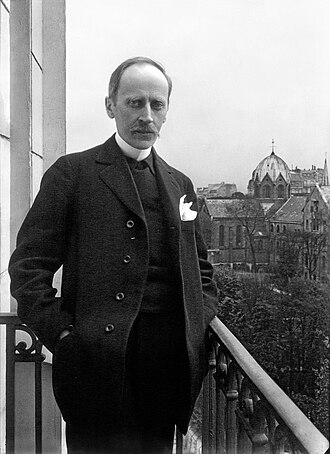 Romain Rolland
"The decades-long draconian approach of the international community to preventing drug dependence is now widely recognised to have been a human disaster, both in the failure to tackle the primary issue and for the additional human suffering caused, including the patients in moderate to severe pain who have been prevented from accessing essential medicines. We need politicians and policymakers to be courageous enough to admit that past policies were misguided, and to rebalance their priorities and approaches in ways that will reduce human suffering."
"O may I join the choir invisible Of those immortal dead who live again In minds made better by their presence; live In pulses stirred to generosity, In deeds of daring rectitude, in scorn For miserable aims that end with self, In thoughts sublime that pierce the night like stars, And with their mild persistence urge mens search To vaster issues."
"There is no question that religions have historically played the role of making people contented with their lot. ...such a doctrine would be very appealing to the ruling classes of a society. ...Many societies, for this reason alone, encourage the contentment with your lot that the religious premise of heaven affords."
"Value of a man depends upon his courage; his veracity depends upon his self-respect and his chastity depends upon his sense of honor."
"What counts most is holding on. The growth of a train of thought is not a direct forward flow. There is a succession of spurts separated by intervals of stagnation, frustration, and discouragement. If you hold on, there is bound to come a certain clarification. The unessential components drop off and a coherent, lucid whole begins to take shape."