SHAWORDS

..Something else about Delacroix — he had a discussion with a friend a — Eugène Delacroix

"..Something else about Delacroix — he had a discussion with a friend about the question of working absolutely from nature, and said on that occasion that one should take ones studies from nature — but that the actual painting had to be made by heart. This friend was walking along the boulevard when they had this discussion — which was already fairly heated. When they parted the other man was still not entirely persuaded. After they parted, Delacroix let him stroll on for a bit — then (making a trumpet of his two hands) bellowed after him in the middle of the street — to the consternation of the worthy passers-by: By heart! By heart! (Par coeur! Par coeur!) I cant tell you how much I enjoyed reading this article and some other things about Delacroix.."
Eugène Delacroix
Eugène Delacroix
Eugène Delacroix
author66 quotes

Ferdinand Victor Eugène Delacroix was a French Romantic artist who was regarded as the leader of the French Romantic school.

More by Eugène Delacroix

View all →
Quote
"Criticism, like so many other things, keeps to what has been said before and does not get out of the rut. This business of the Beautiful some see it in curved lines, some in straight lines, but all persist in seeing it as a matter of line. I am now looking out of my window and I can see the most lovely countryside; lines just do not come into my head: the lark is singing, the river sparkles with a thousand diamonds, the leaves are whispering; where, I should like to know, are the lines that produce delicious impressions like these? They refuse to see proportion or harmony except between two lines: all else they regard as chaos, and the dividers alone are judge."
Eugène DelacroixEugène Delacroix
Quote
"If you make the light dominate too much, the breadth of the planes leads to the absence of half tints, and consequently to discoloration; the opposite abuse is harmful above all in big compositions destined to be seen from a distance, like ceilings, etc. In the latter form of painting, Paul Veronese goes beyond Rubens through the simplicity of his local color and his breadth in handling the light.. .Veronese had greatly to strengthen his local color in order that it should not appear discolored when immunized by the very broad light he threw on it."
Eugène DelacroixEugène Delacroix
Quote
"For a man who is sensitive to nature, happiness consists in expressing nature. How infinitely happy, then, is the man who reflects nature like a mirror without being aware of it, who does the thing for love of it and not from any pretensions to take first place. This noble unself-consciousness is what we find in all truly great men, in the founders of the arts. I picture the great Poussin, in his retreat, delighting in the study of the human heart.. ..I picture Raphael in the arms of his mistress, turning from La Fornarina to paint his Saint Cecilia.. ..I am only too well aware that I am far not only from their divine spirit, but even from their modest simplicity..."
Eugène DelacroixEugène Delacroix

More on Friendship

View all →
Quote
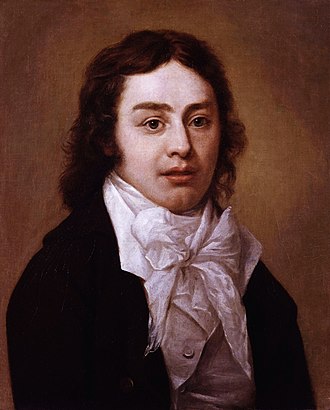
"How seldom, Friend! a good great man inherits Honour or wealth, with all his worth and pains! It sounds like stories from the land of spirits, If any man obtain that which he merits, Or any merit that which he obtains.   . For shame, dear Friend! renounce this canting strain! … Greatness and goodness are not means, but ends! Hath he not always treasures, always friends, The good great man? Three treasures, and , And , regular as infants breath; And three firm friends, more sure than day and night, , his , and the Angel ."
Samuel Taylor ColeridgeSamuel Taylor Coleridge
Quote
"Chronology, the time which changes things, makes them grow older, wears them out, and manages to dispose of them, chronologically, forever. Thank God there is kairos too: again the Greeks were wiser than we are. They had two words for time: chronos and kairos. Kairos is not measurable. Kairos is ontological. In kairos we are, we are fully in isness, not negatively, as Sartre saw the isness of the oak tree, but fully, wholly, positively. Kairos can sometimes enter, penetrate, break through : the child at play, the painter at his easel, Serkin playing the Appassionata are in kairos. The saint in prayer, friends around the dinner table, the mother reaching out her arms for her newborn baby are in kairos. The bush, the , is in kairos, not any burning bush, but the particular burning bush before which Moses removed his shoes; the bush I pass by on my way to the brook. In kairos that part of us which is not consumed in the burning is wholly awake."
O
Ontology
Quote
"Besides inventing quantum theory, Planck had made another great contribution to science by welcoming and generously supporting the young Albert Einstein. In 1905, when Einstein, then an unknown employee of the Swiss patent office in Bern, sent five revolutionary papers to the physics journal that Planck edited in Berlin, Planck immediately recognized them as works of genius and published them quickly without sending them to referees. He did not agree with all of Einstein’s ideas, but he published all of them. He helped Einstein to move ahead in the academic world, and in 1913 invited him to a full professorship in Berlin. For twenty years Planck and Einstein were friends and colleagues in Berlin, leaders of a scientific community that remained creative and vibrant, in spite of the political and economic disarray that surrounded them. Planck was the rock-solid central figure of German science, with the vision to promote the unorthodox and unpatriotic citizen-of-the-world Einstein."
M
Max Planck