SHAWORDS

The point is that one sees things at different moments with different — Edvard Munch

HomeEdvard MunchQuote
"The point is that one sees things at different moments with different eyes. Differently in the morning then in the evening. The way in which one sees also depends on ones mood.. ..coming in from a dark bedroom in the morning into the sitting room one will, for example, see everything in a bluish light. Even the deepest shadows are topped with bright light. After a while one will accustom oneself to the light and the shadows will be deeper and everything will be seen more sharply. If an atmosphere of this kind is being painted it wont do merely to sit and gaze at everything just as one sees. One must paint precisely the fleeting moment of significance – one must capture the exact experience separating that significant moment from the next – the exact moment when the motif struck one.. .In some circumstances a chair may seem to be just as interesting as a human being. In some way or another it must have caught the interest in which case the onlookers interest must somehow be engaged in the same way. Its not the chair that should be painted, but what the person has felt at the sight of it [written in Saint Cloud, 1890 - probably related to the chair of Vincent van Gogh"
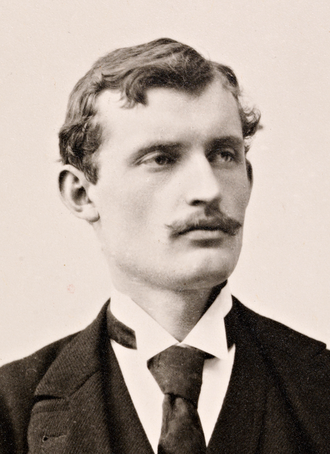
Edvard Munch
Edvard Munch
Edvard Munch
author28 quotes

Edvard Munch was a Norwegian painter. His 1893 work The Scream has become one of the most iconic and acclaimed images in all of Western art.

More by Edvard Munch

View all →
Quote
"The only influences in [the painting The sick Child, Munch painted in his elderly home, remembering very accurate the last days of his dying little sister Sophie] The sick Child.. ..were the ones that come from my home.. ..my childhood and my home. Only someone who knew the conditions at home could possibly understand why there can be no conceivable chance of any other place having played a part – my home is to my art as a midwife is to her children.. ..few painters have ever experienced the full grief of their subject as I did in The sick child. It was not just I who was suffering; it was all my nearest and dearest as well."
Edvard MunchEdvard Munch
Quote
"And I live with the dead – my mother, my sister [Sophie], my grandfather, my father [who died in 1889, when Munch was in France].. .Every day is the same – my friends have stopped coming – their laughter disturbs me, tortures me.. ..my daily walk round the old castle becomes shorter and shorter, it tires me more and more to take walks. The fire in the fireplace is my only friend – the time I spend sitting in front of the fireplace gets longer and longer.. ..at its worst I lean my head against the fireplace overwhelmed by the sudden urge – Kill yourself and then it’s all over. Why live? I light the candle – my huge shadow springs across half the wall, clear up to the ceiling and in the mirror over the fireplace I see the face of my own ghost."
Edvard MunchEdvard Munch
Quote
"At first when I saw The Sick Child [in his imagination] her pallid face and the vivid red hair against the pillow – I saw something that vanished when I tried to paint it. I ended up with a picture on the canvas which, although I was pleased with it, bore little relationship to what I had seen.. ..In the space of that year [1885 – 1886], scratching it out, just letting the paint flow, endlessly I tried to recapture what I had seen for the first time – the pale transparent skin against the linen sheets, the trembling lips, the shaking hands. I repainted the painting numerous times – scratched it out – let it become blurred in the medium – and tried again and again to catch the first impression – the transparent pale skin against the canvas – the trembling mouth – the trembling hands. I had done the chair [in which his sister Sophie had died] with the glass too often. It distracted me from doing the head. – When I saw the picture I could only make out the glass and the surroundings. – Should I remove it completely? – No, it had the effect of giving depth and emphasis to the head. – I scared off half the background and left everything in masses – one could now see past and across the head and the glass.. .I had achieved much of that first impression, the trembling mouth – the transparent skin – the tired eyes – but the picture was not finished in its colour – it was pale grey – the picture was then heavy as lead. [Munch showed the painting on the Autumn Exhibition 18 October 1886; it was criticized severely, even by his bohemian art-friend Jager]"
Edvard MunchEdvard Munch

More on Time

View all →
Quote
"History is a strange experience. The world is quite small now; but history is large and deep. Sometimes you can go much farther by sitting in your own home and reading a book of history, than by getting onto a ship or an airplane and traveling a thousand miles. When you go to Mexico City through space, you find it a sort of cross between modern Madrid and modern Chicago, with additions of its own; but if you go to Mexico City through history, back only 500 years, you will find it as distant as though it were on another planet: inhabited by cultivated barbarians, sensitive and cruel, highly organized and still in the Copper Age, a collection of startling, of unbelievable contrasts."
G
Gilbert Highet
Quote
"As soon as a thought or word becomes a tool, one can dispense with actually ‘thinking’ it, that is, with going through the logical acts involved in verbal formulation of it. As has been pointed out, often and correctly, the advantage of mathematics—the model of all neo-positivistic thinking—lies in just this ‘intellectual economy.’ Complicated logical operations are carried out without actual performance of the intellectual acts upon which the mathematical and logical symbols are based. … Reason … becomes a fetish, a magic entity that is accepted rather than intellectually experienced."
M
Mathematics