Quote
"Il ny a pas une idée qui ne porte en elle sa réfutation possible, un mot, le mot contraire."
 Marcel Proust
"They would have preferred for me, instead of Bloch, companions who would have given me no more than it is proper to give according to the laws of middle-class morality, who would not unexpectedly send me a basket of fruit because they happened, that morning, to have thought of me with affection, but who, being incapable of inclining in my favour, by a simple impulse of imagination and sensibility, the exact balance of the duties and claims of friendship, would be equally incapable of loading the scales to my detriment. Even our faults will not easily divert from the path of their duty towards us those conventional natures of which the model was my great-aunt who, estranged for years from a niece to whom she never spoke, yet made no change in the will in which she left that niece the whole of her fortune, because she was her next-of-kin and it was the proper thing to do."
Valentin Louis Georges Eugène Marcel Proust was a French novelist, literary critic, and essayist best known for his novel À la recherche du temps perdu, which was published in seven volumes between 1913 and 1927. He is considered by critics and writers to be one of the most influential authors of the twentieth century.
"Il ny a pas une idée qui ne porte en elle sa réfutation possible, un mot, le mot contraire."
Marcel Proust"I shall not find a painting more beautiful because the artist has painted a hawthorn in the foreground, though I know of nothing more beautiful than the hawthorn, for I wish to remain sincere and because I know that the beauty of a painting does not depend on the things represented in it. I shall not collect images of hawthorn. I do not venerate hawthorn, I go to see and smell it."
Marcel Proust"Ladultère introduit lesprit dans la lettre que bien souvent le mariage eût laissée morte."
Marcel Proust"[Music] a pederast might hum when raping a choirboy."
Marcel Proust"A man is not more entitled to be "received in good society," or at least to wish to be, because he is more intelligent and cultivated. This is one of those sophisms that the vanity of intelligent people picks up in the arsenal of their intelligence to justify their basest inclinations. In other words, having become more intelligent creates some rights to be less. Very simply, diverse personalities are to be found in the breast of each of us, and often the life of more than one superior man is nothing but the coexistence of a philosopher and a snob. Actually, there are very few philosophers and artists who are absolutely detached from ambition and respect for power, from "people of position." And among those who are more delicate or more sated, snobism replaces ambition and respect for power in the same way superstition arises on the ruins of religious beliefs. Morality gains nothing there. Between a worldly philosopher and a philosopher intimidated by a minister of state, the second is still the more innocent."
Marcel Proust"Par l’art seulement, nous pouvons sortir de nous, savoir ce que voit un autre de cet univers qui n’est pas le même que le nôtre et dont les paysages nous seraient restés aussi inconnus que ceux qu’il peut y avoir dans la lune. Grâce à l’art, au lieu de voir un seul monde, le nôtre, nous le voyons se multiplier, et autant qu’il y a d’artistes originaux, autant nous avons de mondes à notre disposition, plus différents les uns des autres que ceux qui roulent dans l’infini et qui, bien des siècles après qu’est éteint le foyer dont il émanait, qu’il s’appelât Rembrandt ou Vermeer, nous envoient encore leur rayon spécial.Ce travail de l’artiste, de chercher à apercevoir sous la matière, sous de l’expérience, sous des mots, quelque chose de différent, c’est exactement le travail inverse de celui que, à chaque minute, quand nous vivons détourné de nous-même, l’amour-propre, la passion, l’intelligence, et l’habitude aussi accomplissent en nous, quand elles amassent au-dessus de nos impressions vraies, pour nous les cacher entièrement, les nomenclatures, les buts pratiques que nous appelons faussement la vie."
Marcel Proust"How seldom, Friend! a good great man inherits Honour or wealth, with all his worth and pains! It sounds like stories from the land of spirits, If any man obtain that which he merits, Or any merit that which he obtains.   . For shame, dear Friend! renounce this canting strain! … Greatness and goodness are not means, but ends! Hath he not always treasures, always friends, The good great man? Three treasures, and , And , regular as infants breath; And three firm friends, more sure than day and night, , his , and the Angel ."
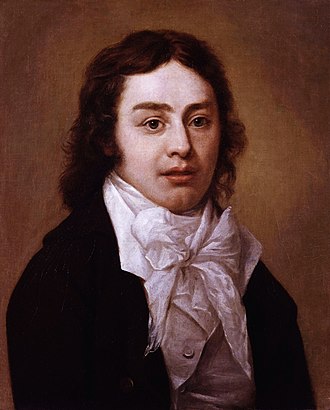 Samuel Taylor Coleridge
"Chronology, the time which changes things, makes them grow older, wears them out, and manages to dispose of them, chronologically, forever. Thank God there is kairos too: again the Greeks were wiser than we are. They had two words for time: chronos and kairos. Kairos is not measurable. Kairos is ontological. In kairos we are, we are fully in isness, not negatively, as Sartre saw the isness of the oak tree, but fully, wholly, positively. Kairos can sometimes enter, penetrate, break through : the child at play, the painter at his easel, Serkin playing the Appassionata are in kairos. The saint in prayer, friends around the dinner table, the mother reaching out her arms for her newborn baby are in kairos. The bush, the , is in kairos, not any burning bush, but the particular burning bush before which Moses removed his shoes; the bush I pass by on my way to the brook. In kairos that part of us which is not consumed in the burning is wholly awake."
"Besides inventing quantum theory, Planck had made another great contribution to science by welcoming and generously supporting the young Albert Einstein. In 1905, when Einstein, then an unknown employee of the Swiss patent office in Bern, sent five revolutionary papers to the physics journal that Planck edited in Berlin, Planck immediately recognized them as works of genius and published them quickly without sending them to referees. He did not agree with all of Einstein’s ideas, but he published all of them. He helped Einstein to move ahead in the academic world, and in 1913 invited him to a full professorship in Berlin. For twenty years Planck and Einstein were friends and colleagues in Berlin, leaders of a scientific community that remained creative and vibrant, in spite of the political and economic disarray that surrounded them. Planck was the rock-solid central figure of German science, with the vision to promote the unorthodox and unpatriotic citizen-of-the-world Einstein."
"One day I was filled with longing To behold in human form the splendours of the Friend, To witness the ocean gathered up into a drop, The sun compressed into a single atom."
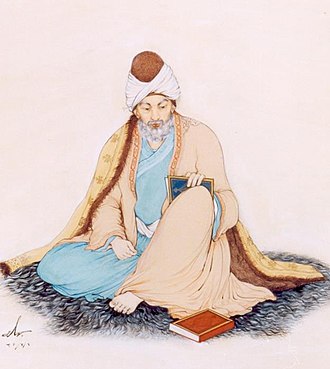 Rumi
Rumi"Our friends from the Trade Federation have pledged their support. And when their battle droids are combined with yours, we shall have an army greater than any in the galaxy. The Jedi will be overwhelmed. The Republic will agree to any demands we make."
 Star Wars: Episode II – Attack of the Clones
"Although my heart may be weak, its not alone. Its grown with each new experience. And its found a home with all the friends Ive made. Ive become a part of their heart, just as theyve become a part of mine. And if they think of me now and then, if they dont forget me, then our hearts will be one. I dont need a weapon. My friends are my power!"
 Kingdom Hearts