SHAWORDS

Third, a just peace includes not only civil and political rights – it — Global warming

"Third, a just peace includes not only civil and political rights – it must encompass economic security and opportunity. For true peace is not just freedom from fear, but freedom from want. It is undoubtedly true that development rarely takes root without security; it is also true that security does not exist where human beings do not have access to enough food, or clean water, or the medicine and shelter they need to survive. It does not exist where children can’t aspire to a decent education or a job that supports a family. The absence of hope can rot a society from within. And that’s why helping farmers feed their own people – or nations educate their children and care for the sick – is not mere charity. It’s also why the world must come together to confront climate change. There is little scientific dispute that if we do nothing, we will face more drought, more famine, more mass displacement – all of which will fuel more conflict for decades. For this reason, it is not merely scientists and environmental activists who call for swift and forceful action – it’s military leaders in my own country and others who understand our common security hangs in the balance. Agreements among nations. Strong institutions. Support for human rights. Investments in development. All these are vital ingredients in bringing about the evolution that President Kennedy spoke about. And yet, I do not believe that we will have the will, the determination, the staying power, to complete this work without something more – and that’s the continued expansion of our moral imagination; an insistence that theres something irreducible that we all share."
G
Global warming
Global warming
author87 quotes

Present-day climate change includes both global warming—the ongoing increase in global average temperature—and its wider effects on Earth's climate system. Climate change in a broader sense also includes previous long-term changes to Earth's climate. The modern-day rise in global temperatures is driven by human activities, especially fossil fuel burning since the Industrial Revolution. Fossil fuel

More by Global warming

View all →
Quote
"Is humankind itself hastening its own end? Man has, for instance, been burning carbon-containing fuel — wood, coal, oil, gas — at a steadily accelerating rate. All these fuels form carbon dioxide. Some is absorbed by plants and the oceans but not as fast as it is produced. This means the carbon dioxide content of the air is going up — slightly but nevertheless up. Carbon dioxide retains heat, and even a small rise means a warming of the Earths atmosphere. This may result in the melting of the polar ice caps with unusual speed, flooding the world before we have learned climate control. In reverse, our industrial civilization is making our atmosphere dustier so that it reflects more sunlight away and cools the Earth slightly — thus making possible a glacial advance in a few centuries, also before we have learned climate control."
G
Global warming
Quote
"Im not saying that the Greenhouse Effect is not extremely important. Hey, I live in Miami, and if the polar ice caps start melting, I stand a good chance of waking up one morning and finding myself festooned with kelp. Its just that, what with working and paying bills and transporting my son to and from the pediatrician and trying to teach the dog not to throw up on the only nice rug in the entire house, I just dont seem to have enough room in my brain for the Greenhouse Effect and all the other problems I know I should be concerned about, such as drugs and AIDS and Lebanon and pollution and cholesterol and caffeine and cancer and Japanese investors buying the Lincoln Memorial and nuclear war and dirty rock lyrics and this new barbecue grill we got."
G
Global warming
Quote
"Despite its imperfections, the European Union can be, and indeed is, a powerful inspiration for many around the world. The challenges faced from one region to the other may differ in scale but they do not differ in nature. We all share the same planet. Poverty, organized crime, terrorism, climate change: these are problems that do not respect national borders. We share the same aspirations and universal values: these are progressively taking root in a growing number of countries all over the world. We share “l’irréductible humain”, the irreducible uniqueness of the human being. Beyond our nation, beyond our continent, we are all part of one mankind. Jean Monnet, ends his Memoirs with these words: “Les nations souveraines du passé ne sont plus le cadre où peuvent se résoudre les problèmes du présent. Et la communauté elle-même n’est qu’un étape vers les formes d’organisation du monde de demain.” (“The sovereign nations of the past can no longer solve the problems of the present. And the European Community itself is only a stage on the way to the organised world of the future.”) This federalist and cosmopolitan vision is one of the most important contributions that the European Union can bring to a global order in the making."
G
Global warming
Quote
"Earths oceans and land cover are doing us a favor. As people burn fossil fuels and clear forests, only half of the carbon dioxide released stays in the atmosphere, warming and altering Earths climate. The other half is removed from the air by the planets vegetation ecosystems and oceans. As carbon dioxide levels in the atmosphere continue their rapid, human-made rise past levels not seen for hundreds of thousands of years, NASA scientists and others are confronted with an important question for the future of our planet: How long can this balancing act continue? And if forests, other vegetation and the ocean cannot continue to absorb as much or more of our carbon emissions, what does that mean for the pace of climate change in the coming century? "Today and for the past 50 to 100 years, the oceans and land biosphere have consistently taken up about half of human emissions," said Dave Schimel of NASAs Jet Propulsion Laboratory, Pasadena, California. "If that were to change, the effect of fossil emissions on climate would also change. We dont understand that number, and we dont know how it will change in the future."
G
Global warming
Quote
"There are all kinds of causes to be alarmed about. For example, theres the Greenhouse Effect, which is one of the more recent in a series of alarming worldwide homicidal trends to be discovered by those busy beavers, the scientists. Theyve found that the Earth is slowly being turned into a vast greenhouse, so that by the year 2010- unless something is done- the entire human race will be crushed beneath a humongous tomato. Or something along those lines. I confess that I havent been following the Greenhouse Effect all that closely."
G
Global warming

More on Friendship

View all →
Quote
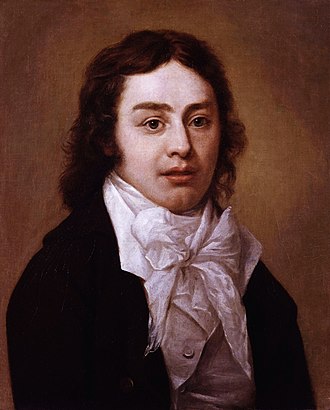
"How seldom, Friend! a good great man inherits Honour or wealth, with all his worth and pains! It sounds like stories from the land of spirits, If any man obtain that which he merits, Or any merit that which he obtains.   . For shame, dear Friend! renounce this canting strain! … Greatness and goodness are not means, but ends! Hath he not always treasures, always friends, The good great man? Three treasures, and , And , regular as infants breath; And three firm friends, more sure than day and night, , his , and the Angel ."
Samuel Taylor ColeridgeSamuel Taylor Coleridge
Quote
"Chronology, the time which changes things, makes them grow older, wears them out, and manages to dispose of them, chronologically, forever. Thank God there is kairos too: again the Greeks were wiser than we are. They had two words for time: chronos and kairos. Kairos is not measurable. Kairos is ontological. In kairos we are, we are fully in isness, not negatively, as Sartre saw the isness of the oak tree, but fully, wholly, positively. Kairos can sometimes enter, penetrate, break through : the child at play, the painter at his easel, Serkin playing the Appassionata are in kairos. The saint in prayer, friends around the dinner table, the mother reaching out her arms for her newborn baby are in kairos. The bush, the , is in kairos, not any burning bush, but the particular burning bush before which Moses removed his shoes; the bush I pass by on my way to the brook. In kairos that part of us which is not consumed in the burning is wholly awake."
O
Ontology
Quote
"Besides inventing quantum theory, Planck had made another great contribution to science by welcoming and generously supporting the young Albert Einstein. In 1905, when Einstein, then an unknown employee of the Swiss patent office in Bern, sent five revolutionary papers to the physics journal that Planck edited in Berlin, Planck immediately recognized them as works of genius and published them quickly without sending them to referees. He did not agree with all of Einstein’s ideas, but he published all of them. He helped Einstein to move ahead in the academic world, and in 1913 invited him to a full professorship in Berlin. For twenty years Planck and Einstein were friends and colleagues in Berlin, leaders of a scientific community that remained creative and vibrant, in spite of the political and economic disarray that surrounded them. Planck was the rock-solid central figure of German science, with the vision to promote the unorthodox and unpatriotic citizen-of-the-world Einstein."
M
Max Planck