SHAWORDS

We do not intend to part from the Americans and we do not intend to be — Harold Macmillan

"We do not intend to part from the Americans and we do not intend to be satellites. I am sure they do not want us to be so. The stronger we are, the better partners we shall be; and I feel certain that as the months pass we shall draw continually closer together with mutual confidence and respect."
H
Harold Macmillan
Harold Macmillan
author16 quotes

Maurice Harold Macmillan, 1st Earl of Stockton, was a British statesman and Conservative politician who was Prime Minister of the United Kingdom from 1957 to 1963. Nicknamed "Supermac", he was known for his pragmatism, wit, and unflappability.

More by Harold Macmillan

View all →
Quote
"This divide between the American and British attitudes to diplomacy was not absolute, of course. Diplomats on both sides were skeptical about letting their leaders loose at the summit, and not all Americans believed that dialogue with the Soviets was pointless. But Republican exploitation of the Cold War and of the Yalta myths made it particularly difficult for U.S. policymakers to show much flexibility in the 1950s, whatever their inclinations. Consequently the initiative for summitry tended to come from Europe. On the Western side in the late 1950s it was Harold Macmillan, the British prime minister, who made the run for a summit— rather surprisingly, it might seem, considering his past. In 1938 he had been one of the few Tory opponents of Munich. He felt Yalta had been “a failure and a disaster” because “in an atmosphere of fervid rush and hurry, vast decisions were reached in a few crowded days.” And he noted in his diary in February 1957, weeks after taking office: “I am said to have lost touch with public opinion in England because I have not already set out for Moscow to see Khrushchev. All this is pure Chamberlainism. It is raining umbrellas.” But, as Churchill once observed, “how much more attractive a top-level meeting seems when one has reached the top!” Once into his stride as premier, Macmillan saw the political benefits of summitry and in February 1959 he contrived a personal visit to Moscow. Politically the trip was a great success, helping Macmillan win an election by a landslide later that year. But Britain, like France, was no longer a serious presence at the top table. The real momentum for a summit in the late 1950s came not from Western capitals but from the Kremlin."
H
Harold Macmillan

More on Friendship

View all →
Quote
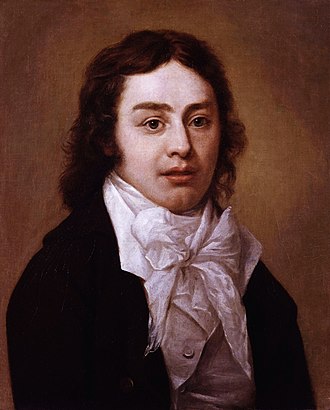
"How seldom, Friend! a good great man inherits Honour or wealth, with all his worth and pains! It sounds like stories from the land of spirits, If any man obtain that which he merits, Or any merit that which he obtains.   . For shame, dear Friend! renounce this canting strain! … Greatness and goodness are not means, but ends! Hath he not always treasures, always friends, The good great man? Three treasures, and , And , regular as infants breath; And three firm friends, more sure than day and night, , his , and the Angel ."
Samuel Taylor ColeridgeSamuel Taylor Coleridge
Quote
"Chronology, the time which changes things, makes them grow older, wears them out, and manages to dispose of them, chronologically, forever. Thank God there is kairos too: again the Greeks were wiser than we are. They had two words for time: chronos and kairos. Kairos is not measurable. Kairos is ontological. In kairos we are, we are fully in isness, not negatively, as Sartre saw the isness of the oak tree, but fully, wholly, positively. Kairos can sometimes enter, penetrate, break through : the child at play, the painter at his easel, Serkin playing the Appassionata are in kairos. The saint in prayer, friends around the dinner table, the mother reaching out her arms for her newborn baby are in kairos. The bush, the , is in kairos, not any burning bush, but the particular burning bush before which Moses removed his shoes; the bush I pass by on my way to the brook. In kairos that part of us which is not consumed in the burning is wholly awake."
O
Ontology
Quote
"Besides inventing quantum theory, Planck had made another great contribution to science by welcoming and generously supporting the young Albert Einstein. In 1905, when Einstein, then an unknown employee of the Swiss patent office in Bern, sent five revolutionary papers to the physics journal that Planck edited in Berlin, Planck immediately recognized them as works of genius and published them quickly without sending them to referees. He did not agree with all of Einstein’s ideas, but he published all of them. He helped Einstein to move ahead in the academic world, and in 1913 invited him to a full professorship in Berlin. For twenty years Planck and Einstein were friends and colleagues in Berlin, leaders of a scientific community that remained creative and vibrant, in spite of the political and economic disarray that surrounded them. Planck was the rock-solid central figure of German science, with the vision to promote the unorthodox and unpatriotic citizen-of-the-world Einstein."
M
Max Planck