Quote
"Demand me nothing: what you know, you know: From this time forth I never will speak word."
O
Othello"What noise is this? Not dead — not yet quite dead? I that am cruel am yet merciful; I would not have the linger in thy pain So, so."
The Tragedy of Othello, the Moor of Venice, often shortened to Othello, is a tragedy written by William Shakespeare around 1603. Set in Venice and Cyprus, the play depicts the Moorish military commander Othello as he is manipulated by his ensign, Iago, into suspecting his wife Desdemona of infidelity. Othello is widely considered one of Shakespeare's greatest works and is usually classified among
"Demand me nothing: what you know, you know: From this time forth I never will speak word."
"Thus do I ever make my fool my purse."
"Even now, now, very now, an old black ram Is tupping your white ewe."
"In following him, I follow but myself."
"Her father loved me; oft invited me; Still questiond me the story of my life, From year to year, the battles, sieges, fortunes, That I have passed. I ran it through, even from my boyish days, To the very moment that he bade me tell it; Wherein I spake of most disastrous chances, Of moving accidents by flood and field Of hair-breadth scapes i the imminent deadly breach, Of being taken by the insolent foe And sold to slavery, of my redemption thence And portance in my travels history: Wherein of antres vast and deserts idle, Rough quarries, rocks and hills whose heads touch heaven It was my hint to speak,--such was the process; And of the Cannibals that each other eat, The Anthropophagi and men whose heads Do grow beneath their shoulders. This to hear Would Desdemona seriously incline: But still the house-affairs would draw her thence: Which ever as she could with haste dispatch, Sheld come again, and with a greedy ear Devour up my discourse: which I observing, Took once a pliant hour, and found good means To draw from her a prayer of earnest heart That I would all my pilgrimage dilate, Whereof by parcels she had something heard, But not intentively: I did consent, And often did beguile her of her tears, When I did speak of some distressful stroke That my youth sufferd. My story being done, She gave me for my pains a world of sighs: She swore, in faith, twas strange, twas passing strange, Twas pitiful, twas wondrous pitiful: She wishd she had not heard it, yet she wishd That heaven had made her such a man: she thankd me, And bade me, if I had a friend that loved her, I should but teach him how to tell my story. And that would woo her. Upon this hint I spake: She loved me for the dangers I had passd, And I loved her that she did pity them. This only is the witchcraft I have used: Here comes the lady; let her witness it."
"Keep up your bright swords, for the dew will rust them."
"Now Art, used collectively for painting, sculpture, architecture and music, is the mediatress between, and reconciler of, nature and man. It is, therefore, the power of humanizing nature, of infusing the thoughts and passions of man into everything which is the object of his contemplation."
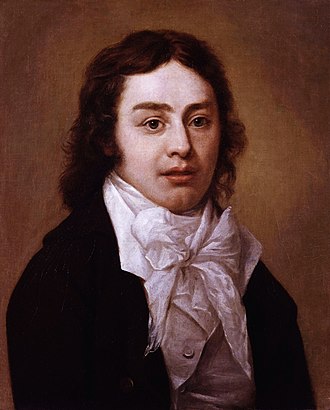 Samuel Taylor Coleridge
"How seldom, Friend! a good great man inherits Honour or wealth, with all his worth and pains! It sounds like stories from the land of spirits, If any man obtain that which he merits, Or any merit that which he obtains.   . For shame, dear Friend! renounce this canting strain! … Greatness and goodness are not means, but ends! Hath he not always treasures, always friends, The good great man? Three treasures, and , And , regular as infants breath; And three firm friends, more sure than day and night, , his , and the Angel ."
Samuel Taylor Coleridge"I find it increasingly necessary to express my ideas first in engraving or lithography so that they may develop before I start to paint. Every year my form and expression become more sensitive, and my ideas frequently have to pass through three graphic stages before I can start on the canvas.. .I can hear you say no, that is impossible because the value of the colors demands quite different treatment from black and white, but it is the inner idea that I try to establish firmly through graphic preparation."
"The amount of pain it [murder] causes to everyone who ever cared about you, and innocent people, outweighs anything you are going through right now."
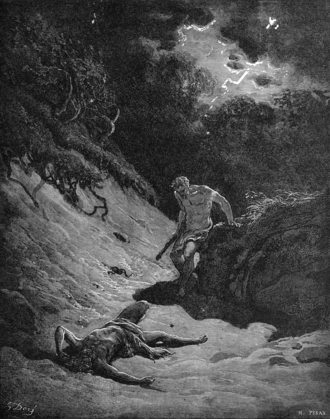 Homicide
"Chronology, the time which changes things, makes them grow older, wears them out, and manages to dispose of them, chronologically, forever. Thank God there is kairos too: again the Greeks were wiser than we are. They had two words for time: chronos and kairos. Kairos is not measurable. Kairos is ontological. In kairos we are, we are fully in isness, not negatively, as Sartre saw the isness of the oak tree, but fully, wholly, positively. Kairos can sometimes enter, penetrate, break through : the child at play, the painter at his easel, Serkin playing the Appassionata are in kairos. The saint in prayer, friends around the dinner table, the mother reaching out her arms for her newborn baby are in kairos. The bush, the , is in kairos, not any burning bush, but the particular burning bush before which Moses removed his shoes; the bush I pass by on my way to the brook. In kairos that part of us which is not consumed in the burning is wholly awake."
"I was quite active politically just previous to this, and Im leading into this time when I was on WPA and there was a group called the Artists Union which was organized, so that I was extremely active in that. Again that meant more meetings and fighting for artists rights on the WPA.. .I would say it gave me an opportunity to continue through a period of where one had a livelihood to deal with and/or painting. This allowed for painting and Id say in that sense it was extremely influencing.. ..WPA itself ended after the War Service Project and by way of terminating, it allowed you to take one of several war courses that were being offered. After which you were supposed to be able to go into that field and earn a living. I took drafting."
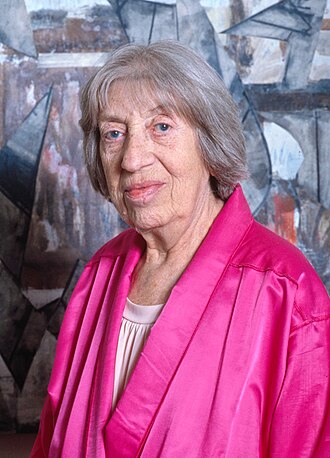 Lee Krasner