Quote
"The book, if you would see anything in it, requires to be read in the clear, brown, twilight atmosphere in which it was written; if opened in the sunshine, it is apt to look exceedingly like a volume of blank pages."
N
Nathaniel Hawthorne"What would a man do, if he were compelled to live always in the sultry heat of society, and could never bathe himself in cool solitude?"
Nathaniel Hawthorne was an American novelist and short story writer. His works often focus on history, morality, and religion.
"The book, if you would see anything in it, requires to be read in the clear, brown, twilight atmosphere in which it was written; if opened in the sunshine, it is apt to look exceedingly like a volume of blank pages."
"Nobody has any conscience about adding to the improbabilities of a marvelous tale."
"Lo, there ye stand, my children," said the figure, in a deep and solemn tone, almost sad with its despairing awfulness, as if his once angelic nature could yet mourn for our miserable race. "Depending upon one anothers hearts, ye had still hoped that virtue were not all a dream. Now are ye undeceived. Evil is the nature of mankind. Evil must be your only happiness. Welcome again, my children, to the communion of your race."
"By the sympathy of your human hearts for sin ye shall scent out all the places — whether in church, bedchamber, street, field, or forest — where crime has been committed, and shall exult to behold the whole earth one stain of guilt, one mighty blood spot."
"Long, long may it be, ere he comes again! His hour is one of darkness, and adversity, and peril. But should domestic tyranny oppress us, or the invaders step pollute our soil, still may the Gray Champion come, for he is the type of New Englands hereditary spirit; and his shadowy march, on the eve of danger, must ever be the pledge, that New Englands sons will vindicate their ancestry."
"In old times, the settlers used to be astounded by the inroads of the northern Indians, coming down upon them from this mountain rampart, through some defile known only to themselves. It is indeed a wondrous path. A demon, it might be fancied, or one of the Titans, was travelling up the valley, elbowing the heights carelessly aside as he passed, till at length a great mountain took its stand directly across his intended road. He tarries not for such an obstacle, but rending it asunder, a thousand feet from peak to base, discloses its treasures of hidden minerals, its sunless waters, all the secrets of the mountains inmost heart, with a mighty fracture of rugged precipices on each side. This is the Notch of the White Hills. Shame on me, that I have attempted to describe it by so mean an image — feeling, as I do, that it is one of those symbolic scenes, which lead the mind to the sentiment, though not to the conception, of Omnipotence."
"I should say that when people talk about capitalism its a bit of a joke. Theres no such thing. No country, no business class, has ever been willing to subject itself to the free market, free market discipline. Free markets are for others. Like, the Third World is the Third World because they had free markets rammed down their throat. Meanwhile, the enlightened states, England, the United States, others, resorted to massive state intervention to protect private power, and still do. Thats right up to the present. I mean, the Reagan administration for example was the most protectionist in post-war American history. Virtually the entire dynamic economy in the United States is based crucially on state initiative and intervention: computers, the internet, telecommunication, automation, pharmaceutical, you just name it. Run through it, and you find massive ripoffs of the public, meaning, a system in which under one guise or another the public pays the costs and takes the risks, and profit is privatized. Thats very remote from a free market. Free market is like what India had to suffer for a couple hundred years, and most of the rest of the Third World."
"He, who begins by loving Christianity better than Truth, will proceed by loving his own Sect or Church better than Christianity, and end in loving himself better than all."
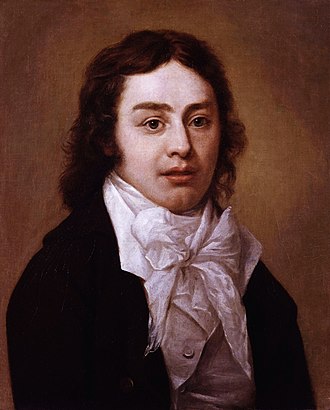 Samuel Taylor Coleridge
"I believe that the unity of man as opposed to other living things derives from the fact that man is the conscious life of himself. Man is conscious of himself, of his future, which is death, of his smallness, of his impotence; he is aware of others as others; man is in nature, subject to its laws even if he transcends it with his thought."
 Erich Fromm
"You cant manage yourself, Root. How do you expect to manage others?"
"Do not try to make the brilliant pupil a replica of yourself."
"I believe that man is in the last resort so free a being that his right to be what he believes himself to be cannot be contested."