Quote
"There is nothing ugly; I never saw an ugly thing in my life: for let the form of an object be what it may, — light, shade, and perspective will always make it beautiful."
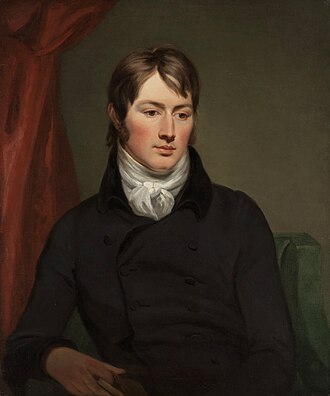 John Constable
"When at work he was life and soul in his subject, and the last time I saw him he told me he once put on his great-coat, and sallied forth in a snow-storm to Hampstead Heath to sketch an ash for some picture he was about. [possibly https://upload.wikimedia.org/wikipedia/commons/0/06/London_from_Hampstead_Heath_in_a_Storm_by_John_Constable_1831.jpg London from Hampstead Heath in a Storm], 1831"
John Constable was an English landscape painter in the Romantic tradition. Born in Suffolk, he is known principally for revolutionising the genre of landscape painting with his pictures of Dedham Vale, the area on the borderland of Suffolk and north Essex surrounding his home – now known as "Constable Country" – which he invested with an intensity of affection. "I should paint my own places best",
"There is nothing ugly; I never saw an ugly thing in my life: for let the form of an object be what it may, — light, shade, and perspective will always make it beautiful."
John Constable"He was acquainted with Archdeacon Fisher, and painted for him Salisbury Cathedral, and several views in that neighbourhood. I have stood on the exact spot from which he took the cathedral, which is very like, though not sufficiently confined for his style of painting. Old Sarum, too, is among his most interesting productions."
John Constable"Where is my great-coat? I am going to see Mr. Constables pictures. [because of the feeling of frost he got from Constables paintings]"
John Constable"Constable himself knew the value of such studies, for he rarely parted with them. He used to say of his studies and pictures that he had no objection to part with the corn, but not with the field that grew it."
John Constable"I knew Constables paintings long before I knew Constable, and formed a very wrong estimate of his character. His paintings give one the idea of a positive, conceited person, whereas anyone more diffident of his own powers could not be. Once, not long before his death, when I was with him on Heston steeple, he scratched on the leads those well-known lines of John Milton where he describes Fame as the last infirmity of noble minds, and introduces the Fury with her abhorred shears. Constable could not have described his own character better."
John Constable"It is much to my advantage that several of my pictures should be seen together, as it displays to advantage their varieties of conception and also of execution, and what they gain by the mellowing hand of time which should never be forced or anticipated. Thus my pictures when first coming forth have a comparative harshness which at the time acts to my disadvantage."
John Constable"Be the change that you wish to see in the world."
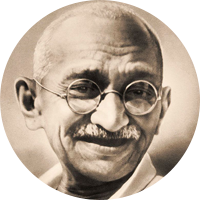 Mahatma Gandhi
"we are engaged in a grim experiment never before attempted. We are subjecting whole populations to exposure to chemicals which animal experiments have proved to be extremely poisonous and in many cases cumulative in their effect. These exposures now begin at or before birth and-unless we change our methods-will continue through the lifetime of those now living. No one knows what the result will be, because we have no previous experience to guide us."
"pity this busy monster, manunkind, not. Progress is a comfortable disease: your victim (death and life safely beyond) plays with the bigness of his littleness"
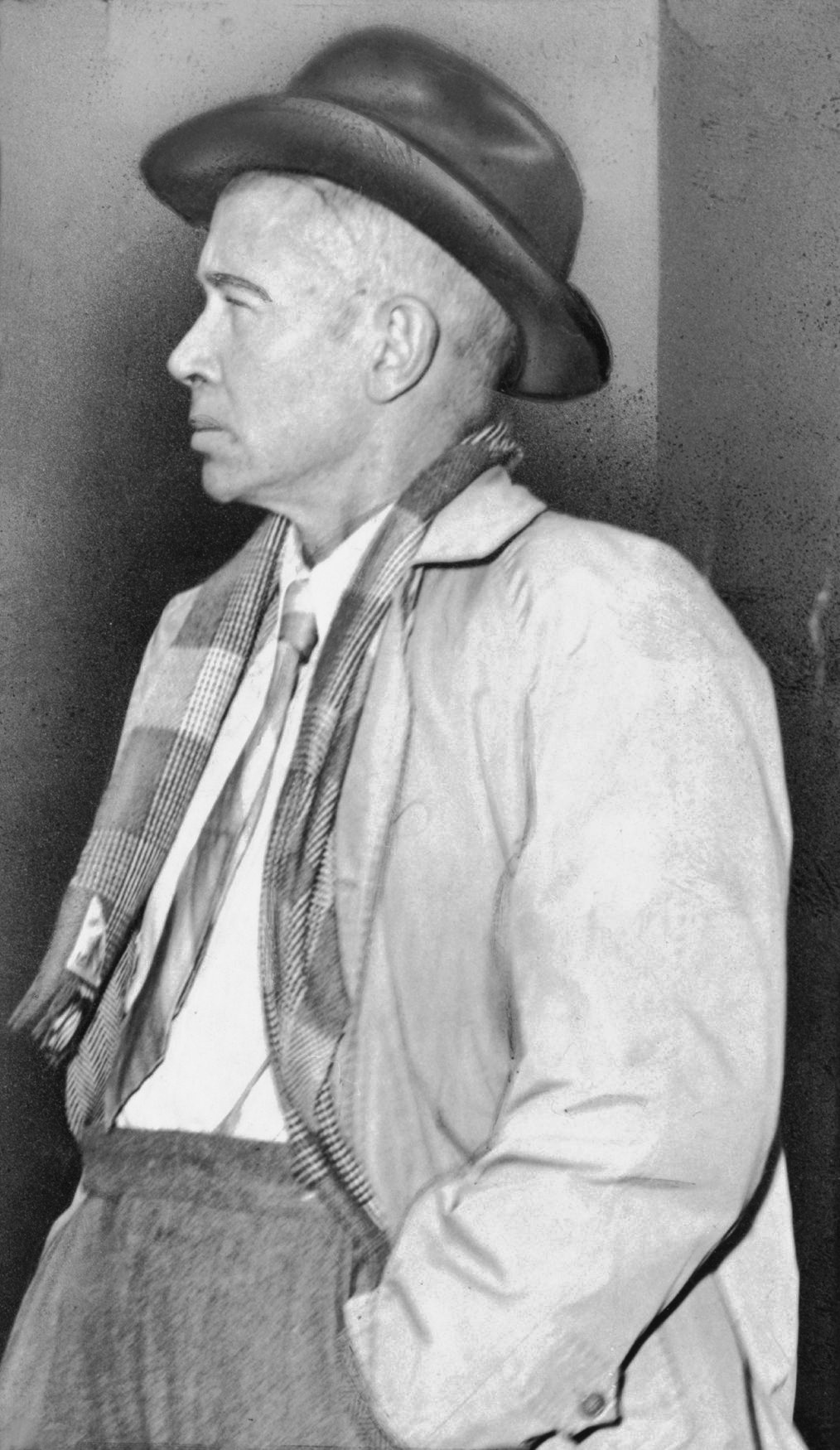 E. E. Cummings
"I believe that the unity of man as opposed to other living things derives from the fact that man is the conscious life of himself. Man is conscious of himself, of his future, which is death, of his smallness, of his impotence; he is aware of others as others; man is in nature, subject to its laws even if he transcends it with his thought."
 Erich Fromm
"“We need brains, is the bottom line,” Ivy said. “We’re not hunter-gatherers anymore. We’re all living like patients in the intensive care unit of a hospital. What keeps us alive isn’t bravery, or athleticism, or any of those other skills that were valuable in a caveman society. It’s our ability to master complex technological skills. It is our ability to be nerds. We need to breed nerds.”"
"I have been clinically depressed for most of my life. I once used drugs to fix it. Then I stopped. I stopped because I decided they were making me stupid, and Id rather be miserable than stupid. I am what I am."