Quote
"I was a born troublemaker and might as well earn a living at it."
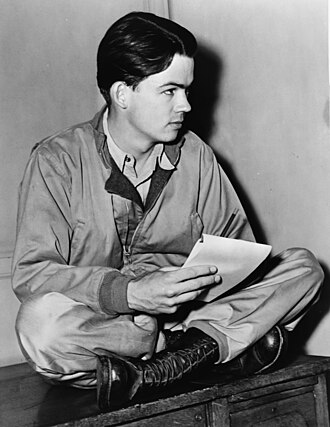 Bill Mauldin
"While a guy at home is sweating over his income tax and Victory garden, a dogface somewhere is getting great joy out of wiggling his little finger. He does it just to see it move and to prove to himself that he is still alive and able to move it."
William Henry Mauldin was an American editorial cartoonist who won two Pulitzer Prizes for his work. He was most famous for his World War II cartoons depicting American soldiers, as represented by the archetypal characters Willie and Joe, two weary and bedraggled infantry troopers who stoically endure the difficulties and dangers of duty in the field.
"I was a born troublemaker and might as well earn a living at it."
Bill Mauldin"Im convinced that the infantry is the group in the army which gives more and gets less than anybody else."
Bill Mauldin"Youve got to be a misanthrope in this business, a real son of a bitch. Im touchy. Ive got raw nerve ends, and Ill jump. If I see a stuffed shirt, I want to punch it."
Bill Mauldin"Willie and Joe are my creatures. Or am I their creature? They are not social reformers. Theyre much more reactive. Theyre not social scientists and Im not a social scientist. Were moral people who do not belong to the moral majority. One of my principles is, Thou shall not bully. The only answer is to muscle the bully. Im very combative that way."
Bill Mauldin"More than anyone else, save only Ernie Pyle, he caught the trials and travails of the GI. For anyone who wants to know what it was like to be an infantryman in World War II, this book is the place to start — and finish."
Bill Mauldin"My outlook on warfare is best illustrated by a cartoon I did some thirty-odd years ago of a soldier in an Italian foxhole reading about the Normandy invasion and observing to his buddy that: "The hell this aint the most important hole in the world. Im in it."
Bill Mauldin"The only influences in [the painting The sick Child, Munch painted in his elderly home, remembering very accurate the last days of his dying little sister Sophie] The sick Child.. ..were the ones that come from my home.. ..my childhood and my home. Only someone who knew the conditions at home could possibly understand why there can be no conceivable chance of any other place having played a part – my home is to my art as a midwife is to her children.. ..few painters have ever experienced the full grief of their subject as I did in The sick child. It was not just I who was suffering; it was all my nearest and dearest as well."
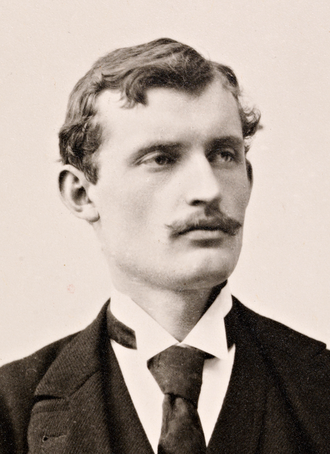 Edvard Munch
"Glen is not a homosexual. Glen is a transvestite, but he is not a homosexual. Transvestism is the term given by medical science to those persons who desperately wish to wear the clothing of the opposite sex, yet whose sex life in all instances remains quite normal. Would you be surprised to know that this rough, tough individual is wearing pink, satin undies under his rough exterior clothing? He is. Then there is your friend the milkman who...who knows how to find comfort at home."
"When white people wear baggy clothing and speak gibberish theyre homeless. When black people wear baggy clothing and speak gibberish theyre called rappers."
"I guess you could say that I was somewhat withdrawn from my classmates. I spent a good deal of time being a loner. I suppose that had something to do with the way we lived — always on the move, never living in one town very long. Its very hard to make lasting friendships that way. And my father was rather strict with me and my two younger sisters. He insisted on proper behaviour and very often vetoed our choices of boyfriends. There was always a curfew whenever my sisters or I would go out on a date — we had to be home on time or else. But I never resented his authority. In fact, Im thankful for my strict upbringing; I feel it has helped me learn discipline — and thats very important in this business."
"Moons waxed and waned, the lilacs bloomed and died, In the broad river ebbed and flowed the tide, Ships went to sea, and ships came home from sea, And the slow years sailed by and ceased to be."
"Some men are born husbands; they have a passion for domesticity, for a fireside, for a home. Yet, curiously, these men very rarely stay at home. Apparently what they want is to have a place to get away from."