Quote
"Dangers await only those who do not react to life."
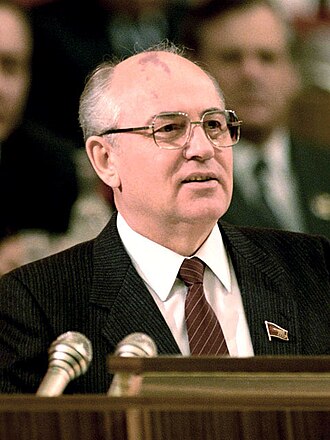 Mikhail Gorbachev
"I was probably too liberal and democratic as regards Yeltsin. I should have sent him as ambassador to Great Britain or maybe a former British colony."
Mikhail Sergeyevich Gorbachev was a Soviet and Russian politician who was the last leader of the Soviet Union from 1985 until the country's dissolution in 1991. He served as General Secretary of the Communist Party from 1985, and additionally as head of state from 1988. Ideologically, he initially adhered to Marxism–Leninism, but moved towards social democracy by the early 1990s.
"Dangers await only those who do not react to life."
Mikhail Gorbachev"If what you have done yesterday still looks big to you, you havent done much today."
Mikhail Gorbachev"Gorbachevs political views were more audacious. Unlike Deng Xiaoping, who, after the chaos of the Cultural Revolution, was obsessed with stability and ruled out democratic reforms, Gorbachev linked perestroika with a policy of glasnost (openness). Taking aim at the USSRs encrusted ruling party and bureaucracy, Gorbachev adopted a stillborn project of Andropovs to reduce their power by introducing new- even Western- ideas into the Soviet environment and engaging the Soviet population in modernizing the country. He went so far as to authorize the opening of the records of Soviet history, including its darkest moments, which ignited an explosion of criticism reaching back to Lenins rule. To be sure, Gorbachevs purpose was to preserve the communist system by revitalizing it from above, but by combining perestroika with glasnost the Soviet leader risked unleashing forces he was ultimately unable to control. Gorbachev was even more daring in his foreign policy because he believed that the relaxation of international tensions was indispensable to his political reforms at home. Convinced that the Soviet Unions greatest threat was nuclear war but that its huge military budget was unsupportable, he intended to achieve security by scaling down the global rivalry between Moscow and Washington and reviving détente. After assembling a group of like-minded liberal internationalists, among them the new foreign minister, Eduard Shevardnadze, and his foreign policy adviser, Anatoly Chernyaev, Gorbachev boldly embarked on a step-by-step program of reducing the USSRs isolation and reaching out to the other side, which included Western Europe, Japan, and China as well as the United States."
Mikhail Gorbachev"Few Soviet citizens lamented Gorbachëv’s going. His policies had ruined the economy and smashed the state into fragments. His critics showed him no mercy. This was ungenerous of them since without his introduction of glasnost and perestroika they could never have had the opportunity to calumniate him. Abroad, he was better respected. His disinclination to halt the decommunisation of eastern Europe by force was widely admired. His primary role in the ending of the Cold War was rightly esteemed. There had been many times when a different General Secretary would have called upon the armed forces and the KGB and reversed the reform programme. Yet the verdict on him has to take account of his inability to understand the nature of the Soviet order. He had genuinely believed that the USSR could be reformed and still remain communist. He had a passion for a democratic, humanitarian Lenin who had never existed in history."
Mikhail Gorbachev"President Gorbachev’s achievements were truly great and historic. Not only did he dissolve the Soviet Union more or less peacefully, but he also prevented a major civil war that could have escalated into a nuclear conflict. I sincerely hope that historians in the future will honor the major achievements and statesmanship of President Gorbachev and of the other leading Soviet politicians of that time."
Mikhail Gorbachev"I consider it vitally important to preserve the democratic achievements which have been attained in the last few years. We have paid with all our history and tragic experience for these democratic achievements, and they are not to be abandoned, whatever the circumstances, and whatever the pretexts. Otherwise, all our hopes for the best will be buried."
Mikhail Gorbachev"The only influences in [the painting The sick Child, Munch painted in his elderly home, remembering very accurate the last days of his dying little sister Sophie] The sick Child.. ..were the ones that come from my home.. ..my childhood and my home. Only someone who knew the conditions at home could possibly understand why there can be no conceivable chance of any other place having played a part – my home is to my art as a midwife is to her children.. ..few painters have ever experienced the full grief of their subject as I did in The sick child. It was not just I who was suffering; it was all my nearest and dearest as well."
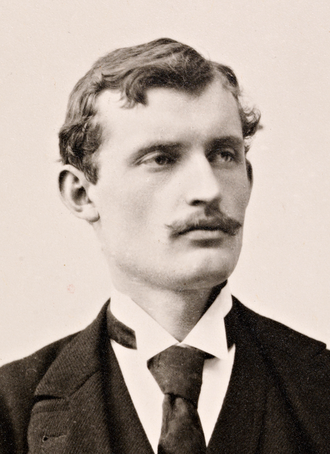 Edvard Munch
"There was a man and he had eight sons. Apart from that, he was nothing more than a comma on the page of History. Its sad, but thats all you can say about some people."
"Im very sad that this seems to be the No. 1 question people want to discuss. I had nothing to do with the issue other than what the media created. I was innocently drawn into the whole controversy. So, after many years, Im glad at least now that I have been given the opportunity to explain to the public and fans my side of the story in my own words. At a lecture, back in 1989, I was asked a question about blasphemy according to Islamic Law, I simply repeated the legal view according to my limited knowledge of the Scriptural texts, based directly on historical commentaries of the Quran. The next day the newspaper headlines read, "Cat Says, Kill Rushdie." I was abhorred, but what could I do? I was a new Muslim. If you ask a Bible student to quote the legal punishment of a person who commits blasphemy in the Bible, he would be dishonest if he didnt mention Leviticus 24:16."
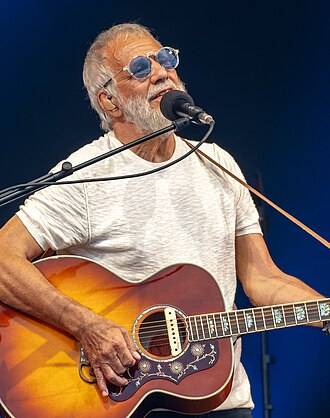 Cat Stevens
"Rhymer, brawler, and musician, Famed for his lunar expedition, And the unnumbered duels he fought, — And lover also, — by interposition! — Here lies Hercule Savinien De Cyrano de Bergerac, Who was everything, yet was naught. I cry you pardon, but I may not stay; See, the moon-ray that comes to call me hence! I would not bid you mourn less faithfully That good, brave Christian: I would only ask That when my body shall be cold in clay You wear those sable mourning weeds for two, And mourn awhile for me, in mourning him."
"We must recognize that there is no indication that Saddam Hussein has any intention of relenting. So we have an obligation of enormous consequence, an obligation to guarantee that Saddam Hussein cannot ignore the United Nations. He cannot be permitted to go unobserved and unimpeded toward his horrific objective of amassing a stockpile of weapons of mass destruction."
"—musics power Is little felt in sunlit hour; But hear its voice when hopes depart, Like swallows, flying from the heart On which the summers late decline Has set a sadness and a sign;. . . . . . How deeply will the spirit feel The lute, the songs sweet-voiced appeal; And how the heart drink in their sighs As echoes they from Paradise."