Quote
"However it may be confounded or covered up or counterfeited, this elemental capacity to fight against injustice remains the distinguishing characteristic of human beings."
R
Rollo May"One does not become fully human painlessly."
Rollo Reece May was an American existential psychologist and author of the influential book Love and Will (1969). He is often associated with humanistic psychology and existentialist philosophy, and alongside Viktor Frankl, was a major proponent of existential psychotherapy. The philosopher and theologian Paul Tillich was a close friend who had a significant influence on his work.
"However it may be confounded or covered up or counterfeited, this elemental capacity to fight against injustice remains the distinguishing characteristic of human beings."
"It is highly significant, and indeed almost a rule, that moral courage has its source in identification through ones own sensitivity with the suffering of ones fellow human beings."
"When I fall in love, I feel more valuable and I treat myself with more care. We have all observed the hesitant adolescent, uncertain of himself, who, when he or she falls in love, suddenly walks with a certain inner assuredness and confidence, a mien which seems to say, "You are looking at somebody now." … this inner sense of worth that comes with being in love does not seem to depend essentially on whether the love is returned or not."
"In any age courage is the simple virtue needed for a human being to traverse the rocky road from infancy to maturity of personality. But in an age of anxiety, an age of her morality and personal isolation, courage is a sine qua non. In periods when the mores of the society were more consistent guides, the individual was more firmly cushioned in his crises of development; but in times of transition like ours, the individual is thrown on his own at an earlier age and for a longer period."
"Art is a substitute for violence. The same impulses that drive persons to violence — the hunger for meaning, the need for ecstasy, the impulse to risk all — drive the artist to create. He is by nature our archrebel. … the essence of the rebellion is in the new way of seeing nature and life."
"My fellow liberals and I in America, and in Europe to a lesser extent, believed so strongly in peace and world brotherhood in those days that we could not even see Hitler or the destructively daimonic reality he represented. Human beings just couldnt be that cruel in the our civilized twentieth century — the accounts in the papers must be wrong. Our error was that we let our convictions limit our perceptions. We had no place for the daimonic; we believed that the world must somehow fit our convictions, and the whole daimonic dimension was ruled out of our perception. Not to recognize the daimonic itself turns out to be daimonic, it makes us accomplices on the side of the destructive possession. The denial of the daimonic is, in effect, a self-castration in love and a self-nullification in will. And the denial leads to the perverted forms of aggression we have seen in our day in which the repressed comes back to haunt us."
"Now Art, used collectively for painting, sculpture, architecture and music, is the mediatress between, and reconciler of, nature and man. It is, therefore, the power of humanizing nature, of infusing the thoughts and passions of man into everything which is the object of his contemplation."
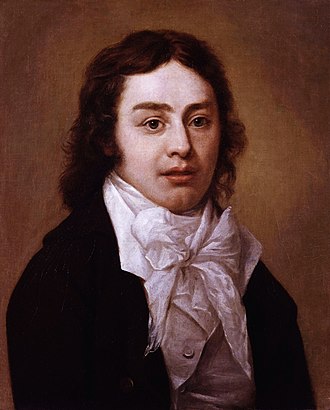 Samuel Taylor Coleridge
"How seldom, Friend! a good great man inherits Honour or wealth, with all his worth and pains! It sounds like stories from the land of spirits, If any man obtain that which he merits, Or any merit that which he obtains.   . For shame, dear Friend! renounce this canting strain! … Greatness and goodness are not means, but ends! Hath he not always treasures, always friends, The good great man? Three treasures, and , And , regular as infants breath; And three firm friends, more sure than day and night, , his , and the Angel ."
Samuel Taylor Coleridge"I find it increasingly necessary to express my ideas first in engraving or lithography so that they may develop before I start to paint. Every year my form and expression become more sensitive, and my ideas frequently have to pass through three graphic stages before I can start on the canvas.. .I can hear you say no, that is impossible because the value of the colors demands quite different treatment from black and white, but it is the inner idea that I try to establish firmly through graphic preparation."
"The amount of pain it [murder] causes to everyone who ever cared about you, and innocent people, outweighs anything you are going through right now."
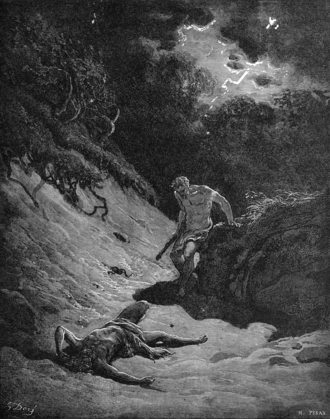 Homicide
"Chronology, the time which changes things, makes them grow older, wears them out, and manages to dispose of them, chronologically, forever. Thank God there is kairos too: again the Greeks were wiser than we are. They had two words for time: chronos and kairos. Kairos is not measurable. Kairos is ontological. In kairos we are, we are fully in isness, not negatively, as Sartre saw the isness of the oak tree, but fully, wholly, positively. Kairos can sometimes enter, penetrate, break through : the child at play, the painter at his easel, Serkin playing the Appassionata are in kairos. The saint in prayer, friends around the dinner table, the mother reaching out her arms for her newborn baby are in kairos. The bush, the , is in kairos, not any burning bush, but the particular burning bush before which Moses removed his shoes; the bush I pass by on my way to the brook. In kairos that part of us which is not consumed in the burning is wholly awake."
"I was quite active politically just previous to this, and Im leading into this time when I was on WPA and there was a group called the Artists Union which was organized, so that I was extremely active in that. Again that meant more meetings and fighting for artists rights on the WPA.. .I would say it gave me an opportunity to continue through a period of where one had a livelihood to deal with and/or painting. This allowed for painting and Id say in that sense it was extremely influencing.. ..WPA itself ended after the War Service Project and by way of terminating, it allowed you to take one of several war courses that were being offered. After which you were supposed to be able to go into that field and earn a living. I took drafting."
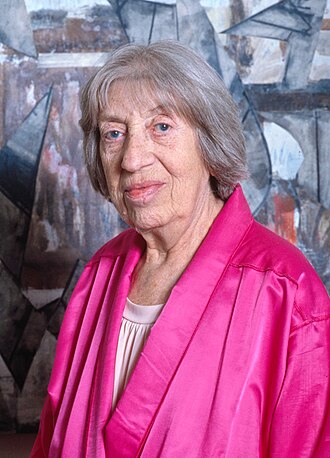 Lee Krasner