SHAWORDS

We can only assert here, with especial satisfaction, that Gabriele Mün — Wassily Kandinsky

"We can only assert here, with especial satisfaction, that Gabriele Münters talent, robust, rooted in an inward strength and sensitivity, in fact genuinely German, should in no circumstances be assessed as masculin, or as quasi-masculine. This talent – and we emphasize it, once more, with great satisfaction – can only be described as exclusively and purely feminine.. .Gabriele Münter doesnt paint feminine subjects, she does not work with feminine materials, and does not permit herself any feminine coquetry. Their are neither raptures, nor agreeable exterior elegance, nor appealing weaknesses to be found here."
Wassily Kandinsky
Wassily Kandinsky
Wassily Kandinsky
author87 quotes

Wassily Wassilyevich Kandinsky was a Russian painter and art theorist active in Germany during the late Belle Époque and Interwar eras. Kandinsky is generally credited as one of the pioneers of abstraction in Western art. Born in Moscow, he began painting studies at the age of 30.

More by Wassily Kandinsky

View all →
Quote
"The more freely abstract the form becomes, the purer, and also the more primitive it sounds. Therefore, in a composition in which corporeal elements are more or less superfluous, they can be more or less omitted and replaced by purely abstract forms, or by corporeal forms that have been completely abstracted.. .Here we are confronted by the question: Must we not then renounce the object altogether, throw it to the winds and instead lay bare the purely abstract? This is a question that naturally arises, the answer to which is at once indicated by an analysis of the concordance of the two elements of form (the objective and the abstract). Just as every word spoken (tree, sky, man) awakens an inner vibration, so too does every pictorially represented object. To deprive oneself of the possibility of this calling up vibrations would be to narrow ones arsenal of expressive means. At least, that is how it is today. But apart from todays answer, the above question receives the eternal answer to every question in art that begins with must. There is no must in art, which is forever free."
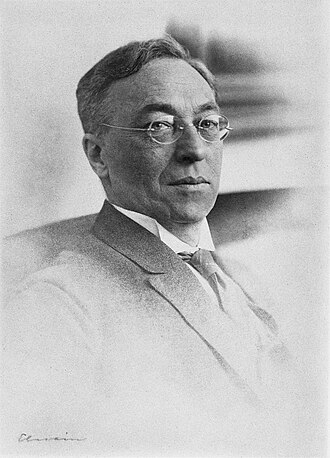
Wassily KandinskyWassily Kandinsky
Quote
"Up till then [c. 1895] I had known nothing but realist art, in effect only the Russians.. .And suddenly for the first time a saw a picture. The catalog told me it was a haystack of Claude Monet; I couldnt tell it from looking. Not able to tell it upset me. I also considered that the artist had no right to paint so indistinctly. I had the dull sensation that the pictures subject was missing. And was amazed and confused to realize that the picture did not merely fascinate but impressed itself indelibly on my memory and constantly floated before my eyes, quite unexpectedly, completely in every detail. I did not understand any of this.. .What was quite plain to me, however, was that the palette had a strength that I heave never before suspected, far beyond anything that I had ever dreamt.."
Wassily KandinskyWassily Kandinsky
Quote
"Every work of art is the child of its age and, in many cases, the mother of our emotions. It follows that each period of culture produces an art of its own which can never be repeated. Efforts to revive the art-principles of the past will at best produce an art that is still-born. It is impossible for us to live and feel, as did the ancient Greeks. In the same way those who strive to follow the Greek methods in sculpture achieve only a similarity of form, the work remaining soulless for all time. Such imitation is mere aping. Externally the monkey completely resembles a human being; he will sit holding a book in front of his nose, and turn over the pages with a thoughtful aspect, but his actions have for him no real meaning."
Wassily KandinskyWassily Kandinsky
Quote
"I met him Kandinsky shortly after my return to Germany from the United States. A year later, in 1901, I decided to move to Munich, but still found very little encouragement as an artist. German painters refused to believe that a woman could have real talent, and I was even denied access, as a student, to the Munich Academy. It is significant that the first Munich artist who took the trouble to encourage me was Kandinsky, himself no German but a recent arrival from Russia."
Wassily KandinskyWassily Kandinsky

More on Pain

View all →
Quote
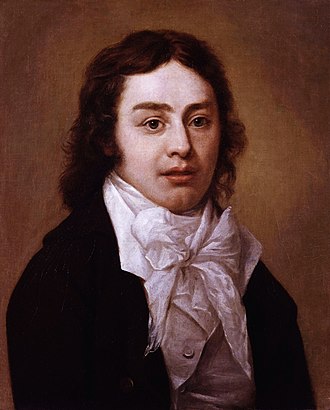
"How seldom, Friend! a good great man inherits Honour or wealth, with all his worth and pains! It sounds like stories from the land of spirits, If any man obtain that which he merits, Or any merit that which he obtains.   . For shame, dear Friend! renounce this canting strain! … Greatness and goodness are not means, but ends! Hath he not always treasures, always friends, The good great man? Three treasures, and , And , regular as infants breath; And three firm friends, more sure than day and night, , his , and the Angel ."
Samuel Taylor ColeridgeSamuel Taylor Coleridge
Quote
"I find it increasingly necessary to express my ideas first in engraving or lithography so that they may develop before I start to paint. Every year my form and expression become more sensitive, and my ideas frequently have to pass through three graphic stages before I can start on the canvas.. .I can hear you say no, that is impossible because the value of the colors demands quite different treatment from black and white, but it is the inner idea that I try to establish firmly through graphic preparation."
E
Ernst Ludwig Kirchner
Quote
"Chronology, the time which changes things, makes them grow older, wears them out, and manages to dispose of them, chronologically, forever. Thank God there is kairos too: again the Greeks were wiser than we are. They had two words for time: chronos and kairos. Kairos is not measurable. Kairos is ontological. In kairos we are, we are fully in isness, not negatively, as Sartre saw the isness of the oak tree, but fully, wholly, positively. Kairos can sometimes enter, penetrate, break through : the child at play, the painter at his easel, Serkin playing the Appassionata are in kairos. The saint in prayer, friends around the dinner table, the mother reaching out her arms for her newborn baby are in kairos. The bush, the , is in kairos, not any burning bush, but the particular burning bush before which Moses removed his shoes; the bush I pass by on my way to the brook. In kairos that part of us which is not consumed in the burning is wholly awake."
O
Ontology
Quote
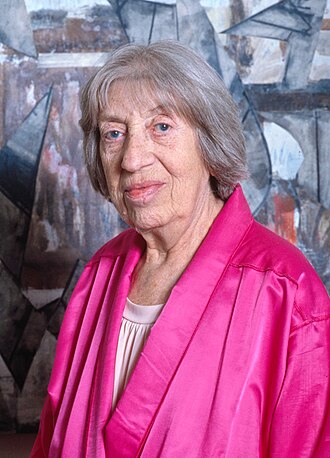
"I was quite active politically just previous to this, and Im leading into this time when I was on WPA and there was a group called the Artists Union which was organized, so that I was extremely active in that. Again that meant more meetings and fighting for artists rights on the WPA.. .I would say it gave me an opportunity to continue through a period of where one had a livelihood to deal with and/or painting. This allowed for painting and Id say in that sense it was extremely influencing.. ..WPA itself ended after the War Service Project and by way of terminating, it allowed you to take one of several war courses that were being offered. After which you were supposed to be able to go into that field and earn a living. I took drafting."
Lee KrasnerLee Krasner