Quote
"Dont you think your Corot [to Guilemet the painter] is a little short on temperament? Im painting a portrait of Vallabreque; the highlight on the nose is pure vermilion [remark of Cezanne ca. 1860]"
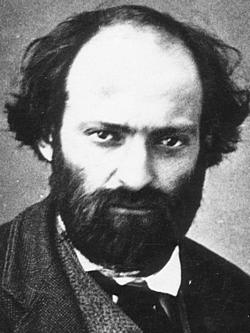 Paul Cézanne
"Yes, yes, a formula thats a straitjacket.. ..not for me! All the same, he tries in vain, does Jean-Dominique [Ingres], to wring your heart with his glossy finish! I said this to Vollard, to shock him, he is very powerful! Nevertheless he [ Jean-Dominique Ingres, French classicist painter] is a damned good man.. .The most modern of the moderns. Do you know why I take my hat off to him? Because he forced his fantastic draughtsmanship down the throats of the idiots who now claim to understand it. But here there are only two: Delacroix and Courbet. The rest are scoundrels."
Paul Cézanne was a French Post-Impressionist painter whose work introduced new modes of representation, influenced avant-garde artistic movements of the early 20th century and formed the bridge between late 19th-century Impressionism and early 20th-century Cubism.
"Dont you think your Corot [to Guilemet the painter] is a little short on temperament? Im painting a portrait of Vallabreque; the highlight on the nose is pure vermilion [remark of Cezanne ca. 1860]"
Paul Cézanne"But there are motifs that would need three or four months work, which could be done, as the vegetation doesnt change here. There are the olive trees and the pines that always keep their leaves. The sun is so fierce that objects seem to be silhouetted, not only in black or white, but in blue, red, brown, violet. I may be wrong, but this seems to be the very opposite of modeling. How happy the gentle landscapists of Auvers would be here, and that [con, or bastard?] Guillemet."
Paul Cézanne"You wretch! [Cezanne is portraying the art dealer Vollard who changed his pose during the painter session] Youve spoiled the pose. Do I have to tell you again you must sit like an apple? Does an apple move?"
Paul Cézanne"Everybodys going crazy over the Impressionists; what art needs is a Poussin made over according to nature. There you have it in a nutshell."
Paul Cézanne"To my mind one does not put oneself in place of the past, one only adds a new link."
Paul Cézanne"At Aix () I am not free; whenever I want to return to Paris, I always have to put up a fight, and, although your (his father) opposition may not be absolute, I am always deeply affected by the resistance that I encounter from you. I sincerely want my liberty unfettered.. ..it would give me great pleasure to work in the Midi, some aspects of which offer many resources to the painter; there I would be able to attack some of the problems that I wish to solve."
Paul Cézanne"Now Art, used collectively for painting, sculpture, architecture and music, is the mediatress between, and reconciler of, nature and man. It is, therefore, the power of humanizing nature, of infusing the thoughts and passions of man into everything which is the object of his contemplation."
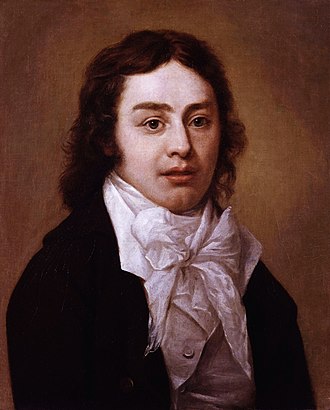 Samuel Taylor Coleridge
"How seldom, Friend! a good great man inherits Honour or wealth, with all his worth and pains! It sounds like stories from the land of spirits, If any man obtain that which he merits, Or any merit that which he obtains.   . For shame, dear Friend! renounce this canting strain! … Greatness and goodness are not means, but ends! Hath he not always treasures, always friends, The good great man? Three treasures, and , And , regular as infants breath; And three firm friends, more sure than day and night, , his , and the Angel ."
Samuel Taylor Coleridge"I find it increasingly necessary to express my ideas first in engraving or lithography so that they may develop before I start to paint. Every year my form and expression become more sensitive, and my ideas frequently have to pass through three graphic stages before I can start on the canvas.. .I can hear you say no, that is impossible because the value of the colors demands quite different treatment from black and white, but it is the inner idea that I try to establish firmly through graphic preparation."
"The amount of pain it [murder] causes to everyone who ever cared about you, and innocent people, outweighs anything you are going through right now."
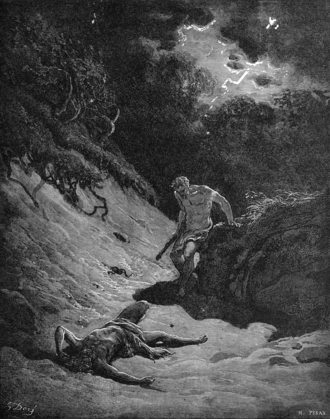 Homicide
"Chronology, the time which changes things, makes them grow older, wears them out, and manages to dispose of them, chronologically, forever. Thank God there is kairos too: again the Greeks were wiser than we are. They had two words for time: chronos and kairos. Kairos is not measurable. Kairos is ontological. In kairos we are, we are fully in isness, not negatively, as Sartre saw the isness of the oak tree, but fully, wholly, positively. Kairos can sometimes enter, penetrate, break through : the child at play, the painter at his easel, Serkin playing the Appassionata are in kairos. The saint in prayer, friends around the dinner table, the mother reaching out her arms for her newborn baby are in kairos. The bush, the , is in kairos, not any burning bush, but the particular burning bush before which Moses removed his shoes; the bush I pass by on my way to the brook. In kairos that part of us which is not consumed in the burning is wholly awake."
"I was quite active politically just previous to this, and Im leading into this time when I was on WPA and there was a group called the Artists Union which was organized, so that I was extremely active in that. Again that meant more meetings and fighting for artists rights on the WPA.. .I would say it gave me an opportunity to continue through a period of where one had a livelihood to deal with and/or painting. This allowed for painting and Id say in that sense it was extremely influencing.. ..WPA itself ended after the War Service Project and by way of terminating, it allowed you to take one of several war courses that were being offered. After which you were supposed to be able to go into that field and earn a living. I took drafting."
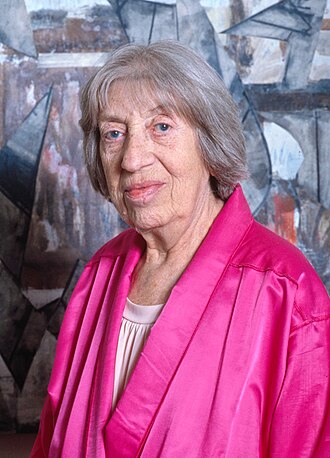 Lee Krasner